

Everest Base Camp trek helicopter return to Lukla is an exciting adventure for all. It offers the best of both worlds – the excitement of trekking through the Himalayas, which is attached to the convenience and luxury of air travel. The EBC Trek (Everest Base Camp) is a popular expedition for many adventure lovers, offering a once-in-a-lifetime journey through the heart of the Himalayas. Standing at 5,364 meters (17,598 feet), Everest Base Camp is a dream destination for thrill-seekers and nature lovers.
While the classic EBC trek is a challenging yet rewarding expedition, the Everest Base Camp Trek with Helicopter Return provides a more accessible and luxurious alternative. This option suits those with time limits or who prefer a less strenuous experience.
F
Everest Base Camp trek with helicopter return begins in Kathmandu, Nepal, a vibrant city rich in history, culture, and Himalayan energy. After soaking in the ancient temples and buzzing streets of Thamel, you’ll board one of the world’s most thrilling mountain flights: a short but unforgettable journey to Lukla Airport (Tenzing-Hillary Airport).
Standing at an altitude of 2,840 meters in the Khumbu region, Lukla is famously known as the “Gateway to Everest”. It’s a lively mountain town with traditional stone houses, fluttering prayer flags, and a buzz of trekkers setting off toward the world’s tallest peak. From here, your trekking adventure truly begins.
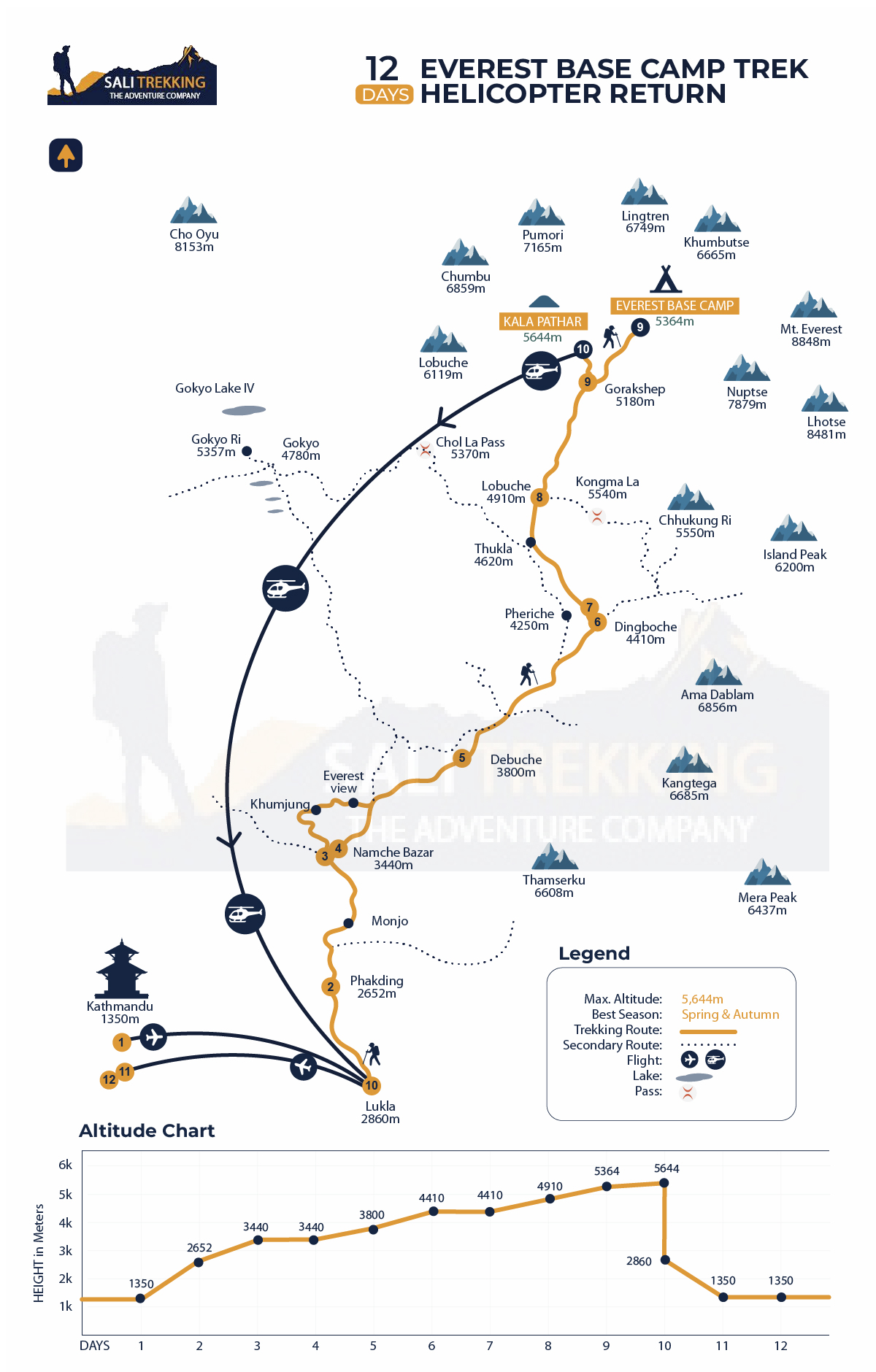
The first few days of the trek help your body adapt to the higher elevation. You’ll follow the Dudh Koshi River to Phakding and then climb to Namche Bazaar (3,440m) — the bustling hub of the Sherpa people. Known as the “Sherpa capital”, Namche is where mountain culture meets comfort, offering cafés, gear shops, bakeries, and stunning Himalayan panoramas.
As you ascend, the landscape shifts dramatically. Lush pine forests give way to alpine meadows, and mighty peaks like Ama Dablam, Nuptse, and Lhotse emerge on the horizon. Prayer flags flutter along the trail, carrying the spiritual rhythm of the Himalayas.
After reaching Base Camp, your return is fast, scenic, and unforgettable. Rather than retracing your steps, you’ll board a helicopter from Gorak Shep or Pheriche, flying high above the trails you walked.
This helicopter ride over Everest Base Camp gives you stunning bird’s-eye views of the Khumbu Glacier, Mount Everest, and the villages scattered across the valley. You’ll land in Lukla and fly back to Kathmandu, saving days of walking while adding a thrilling finish to your Himalayan journey.
Please be aware that the Everest Base Camp trek itinerary is subject to unexpected changes due to factors like Lukla flight delays, cancellations, or unfavorable mountain weather. Your safety and comfort are always our top priorities. Our expert team carefully monitors conditions and adjusts your trekking schedule as needed to ensure a safe and enjoyable journey. We genuinely appreciate your understanding and flexibility in adapting to any necessary changes along the route.
To help avoid disruptions to your international travel plans, we strongly advise adding at least two extra buffer days at the end of your Everest trek. Flights to and from Lukla are often delayed due to unpredictable weather in the Himalayas. Including extra days in your itinerary provides valuable flexibility and peace of mind.
For a more rewarding Nepal experience, you can customize your adventure by adding day tours in Kathmandu before or after your Everest Base Camp trek. Explore cultural sites, historical landmarks, and local markets to enrich your journey and make the most of your visit to Nepal.
If you’re planning to trek to Everest Base Camp, staying informed about Lukla flight schedules is crucial. Flight operations change depending on the season, impacting your travel plans. Airlines adjust flights to manage airport congestion and the number of travelers during peak and off-peak months.
Here’s what you need to know:
Peak trekking season (March, April, May, September, October, November): Flights to Lukla depart from Ramechhap (Manthali) Airport. This means you’ll need to take a 5 to 6-hour drive from Kathmandu to catch your flight.
Off-season (January, February, June, July, August, December): Flights leave directly from Tribhuvan International Airport in Kathmandu.
Lukla airport is located in a mountainous region with challenging terrain and a short runway; flight delays and cancellations are common, especially due to unpredictable weather and air traffic. To avoid rushing or missing connections, it’s wise to add one or two extra days to your trekking itinerary. This buffer allows for flexibility and ensures a smooth start to your adventure in Nepal’s Everest region.
Pro Tip: If you have extra time, consider adding cultural tours, adventure sports, or short scenic hikes around Nepal to make the most of your visit!


Discover the key essentials for your Everest Base Camp Trek, from what food and drinks to expect to the gear you’ll need for safety and comfort. Learn how acclimatization helps prevent altitude sickness, understand the trek’s difficulty level, and get practical tips to prepare for the adventure. This guide ensures you’re fully equipped for a successful and memorable journey to Everest Base Camp.
During your trek, enjoy hearty Nepali meals like dal bhat (rice and lentils), momos (dumplings), Tibetan bread, yak cheese, soups, and noodles. Hot drinks like tea, coffee, and lemon ginger honey are widely available. Bottled water is sold, but carrying purification tablets or filters is recommended for refilling safely.
During your trek, stay in Cozy Teahouses with Sherpa hospitality run by local families. These lodges provide a cultural and comfortable experience.
Expect:
Pro Tip: Eating plenty of carbs helps maintain your energy at high altitudes.
To stay safe and comfortable, pack essential trekking gear:
Rental gear is available in Kathmandu and Namche Bazaar for items like down jackets and sleeping bags.
Understanding Altitude Sickness on the Everest Base Camp Trek. The trek reaches 5,364 meters at Everest Base Camp, where altitude sickness (Acute Mountain Sickness) is a real risk.
Prevention Tips:
Note: Emergency helicopter evacuation is possible from every village along the trek if necessary.
While not a technical climb, the trek is physically demanding due to long trekking days and high altitude. Expect 5–7 hours of walking daily on rugged trails with steep ascents and descents. Good physical fitness and mental endurance are essential.
Having a certified guide is highly recommended for:
Your Everest adventure starts with an exciting mountain flight from Kathmandu (or Ramechhap) to Lukla Airport, the famous gateway to Nepal’s Everest region (Solukhumbu District). Lukla, located at 2,840 meters, marks the start of your trekking journey.
Highlights:
Weather in the Everest region can be unpredictable, with cold nights and sudden snow. High altitude brings risks of sunburn and altitude sickness.
Trekking Tip:
Beyond mountain views, the trek lets you connect with Nepalese culture and Tibetan Buddhism. Visit ancient monasteries like Tengboche, spin prayer wheels, and admire colorful mani walls along the trail.
From Lukla, your trail winds through traditional Sherpa villages like Phakding, Namche Bazaar, Tengboche, and Dingboche. Along the way, you’ll immerse yourself in Sherpa culture and high-altitude landscapes.
Expect:
Your itinerary includes acclimatization stops at Namche Bazaar and Dingboche to prevent altitude sickness and help your body adapt.
Activities:
Safety Note: Proper acclimatization is essential for Everest trekking success.
The moment you reach Everest Base Camp is unforgettable. Surrounded by prayer flags and glaciers, you’ll stand at the starting point of Everest summit expeditions.
Location Insight:
After reaching Base Camp, enjoy a helicopter ride back from Gorakshep or Kalapatthar, flying over glaciers, icefalls, and valleys.
Why It’s Special:
The Everest Base Camp Trek with Helicopter Return is ideal for adventurers who want to experience both the rugged beauty and the luxury of Nepal’s Himalayas in one journey. Whether you’re chasing epic views, cultural encounters, or simply the thrill of the mountains, this trek delivers memories that last a lifetime. This unique trek combines the adventure of trekking with the comfort of a helicopter exit.
Perfect for:
You’ll trek through some of the world’s most stunning landscapes, engage with Nepal’s mountain culture, and end your journey with an unforgettable helicopter ride over the Everest region.
The Everest Base Camp trek is considered moderately challenging. Walking for several hours daily over varied terrain and at high altitudes. While no technical climbing is required, trekkers should be prepared for steep ascents, rocky trails, and changes in weather conditions.
The best time to trek to Everest Base Camp is during the pre-monsoon (spring) season from March to May and the post-monsoon (autumn) season from September to December. These periods offer stable weather, clear skies, and favorable trekking conditions.
While a good fitness level is recommended, trekkers of varying fitness levels can undertake the Everest Base Camp trek. Regular cardio exercise and hiking preparation are advisable to ensure physical fitness for the trek’s demands.
Sufficient acclimatization is crucial to prevent altitude sickness. Trekkers should ascend gradually, stay hydrated, and recognize the symptoms of altitude sickness. It is recommended that rest days be included in the itinerary for acclimatization and to descend if symptoms become severe.
Accommodation along the trek route ranges from basic tea houses to more comfortable lodges with amenities such as hot showers and WiFi, especially in the lower elevations, but higher up, accommodation is more essential. Most trekkers find delicious food along the trail, with different meal options. As the Everest base camp trek is more commercial now, food and accommodation facilities are getting better day by day to serve their guest in the mountains.
While it’s possible to trek independently, many trekkers hire a guide or porter for added support, safety, and convenience. Guides can provide valuable insights and assistance, while porters can help carry trekking gear and luggage, reducing physical strain.
Essential items to pack include sturdy hiking boots, warm clothing, a good-quality sleeping bag, sunscreen, sunglasses, and a first aid kit. It’s essential to pack light, but ensure you have all the necessary gear for the trek.
The cost of the Everest Base Camp Trek with helicopter return can vary depending on factors such as the duration of the trek, accommodation preferences, and whether you choose to hire guides or porters. On average, trekkers can expect to budget between $2,000 to $3,000 for the entire trek, including permits, accommodation, meals, and incidental expenses.
The helicopter cost varies; if you are single, it is USD 750 per person ( minimum of two people in the group). If more people are sharing, the cost will come down slightly. Talk to your guide or company about organizing your trip; they will give you a better idea.
Yes, the helicopter return is considered safe when operated by licensed pilots and companies. Weather conditions are closely monitored before flights.
Typically, 10–12 days, depending on your itinerary and acclimatization days.
Most pickups happen from Gorakshep or Kalapatthar, based on weather and itinerary.
You need the Sagarmatha National Park Permit and Khumbu Pasang Lhamu Rural Municipality Permit.
Not mandatory, but travel insurance covering high-altitude trekking and emergency helicopter evacuation is strongly recommended.
Yes, beginners with good fitness and basic trekking preparation can attempt it, especially since the helicopter avoids the long return trek.
Approximately 65 kilometers (40 miles) from Lukla to Everest Base Camp.
While helpful, prior trekking experience is not mandatory. Basic preparation and professional guiding are sufficient.
Yes, helicopter evacuation is available from key points like Namche Bazaar, Dingboche, or Gorakshep in case of emergencies.
Wi-Fi and mobile signals (Ncell, NTC) are available at most teahouses up to Gorakshep, though often slow and paid
Altitude sickness is a risk above 3,000m. Gradual ascent, hydration, acclimatization days, and guides’ monitoring help manage this.
Yes, helicopter returns from Gorakshep, Kalapatthar, or Pheriche to Lukla or Kathmandu can be booked separately through trekking agencies.
Sali Trekking will adjust plans, offering extra lodging and rescheduling the flight when conditions improve.
Typically, up to 500 kg total per flight, but individual luggage limits are around 15 kg per passenger.
Yes, sharing the helicopter is common and reduces the cost significantly.
Saves 3 days, reduces physical strain, and offers a scenic aerial experience over Everest and Khumbu glaciers.
Helicopters typically fly between 5,000m and 6,000m, depending on weather and air traffic conditions.
Look for government-licensed operators with positive reviews, experienced guides, and clear safety policies, like Sali Trekking.

EBC Trek – Misson Accomplished!
The EBC trek done with Sali Trekking in Apr/ May 2024 was a wonderful journey from start to finish. Sali and his team were professionals who not only ensured that the trek was an enjoyable and fun experience, but the well-being and safety of every team member were also duly looked after. There was no problem with our air flights, accommodation, meals, horse hires and helicopter rides; everything was carefully planned, arranged and well executed by Sali. I would definitely place my trust in Sali Trekking for my next adventure in Nepal.
EBC Trek
We had an amazing experience with Sali and his team.We were a group of 12 people and achieved 100% success rate with our EBC hike. Sali and his team were always there supported us with everything needed during the hike and especially during unexpected flight cancellation, we needed to get impromptu hotel stay and heli ride. I’ll definitely reach out to Sali for my next Nepal trek and be my guide.
Great company
We’ve used this company for our 17-day Three High Pass & EBC hike from 14-31 March. Sali was very responsive to our queries and provided great services even before our trip.
Everything went smoothly until Day 9 of our trek at Lobuche when my wife fell sick and oxygen level dropped below 40%. Sali and our guide, Dinesh, were quick to arrange for helicopter evacuation to take her down to Lukla hospital to get treatment. Thanks to their quick response to arrange the helicopter evacuation, my wife has fully recovered after receiving treatment in Lukla and Kathmandu hospital.
Upon returning to Kathmandu, I’ve decided to do the Mardi Himal Trek alone, and Sali helped to arrange everything again. The 4D3N trek (27-30 March) was an excellent short hike to see the breathtaking panorama of the Annapurna, Dhaulagiri, Machhapuchre, and Manaslu mountain ranges.
Would definitely recommend others to use them for their tours in Nepal.
An experience of a lifetime with brilliant, energetic hikers and very supportive and helpful guides .
It’s an adventure of a lifetime with a bunch of like minded adventurous hikers. We hired Sali Trekking for our adventurous journey at Everest Base Camp. It was my first ever hiking experience in Nepal. So glad that we hired Sali Trekking as they did everything their level best to take care of each and every hiker . We were briefed of what to expect and how to prepare ourself for the journey by Mr. Saligram Aryal a week prior to our hiking at Everest Base Camp. During our journey, Mr. Sudeep , the chief guide accompanied by his assistant Tek did a great job guiding us along the trail. They monitored our health everyday and advised us on what we should and avoid eating to prepare ourself for the hiking experience. Some of us almost gave up just a few days after hiking as the weather was extremely cold for us who are from a warm climate in Malaysia. The altitude sickness was another reason many doubted our own capability to conquer the EBC peak. Nevertheless with much guidance, moral support and motivation from Mr. Sudeep, Mr. Tek and all the porters , all of us successfully reached the peak and returned Kathmandu safely using Helicopter. Everest Base Camp promises extremely beautiful view with lovely and warm Nepali friends to meet and greet along the trail. Choose the best , experienced guide like Sali Trekking to make your experience worthwhile.
Great Team Sali
Great support team from Sali. Sali has great problem skills so we are in safe hands with him. Sali and his team members are warm and friendly always

