
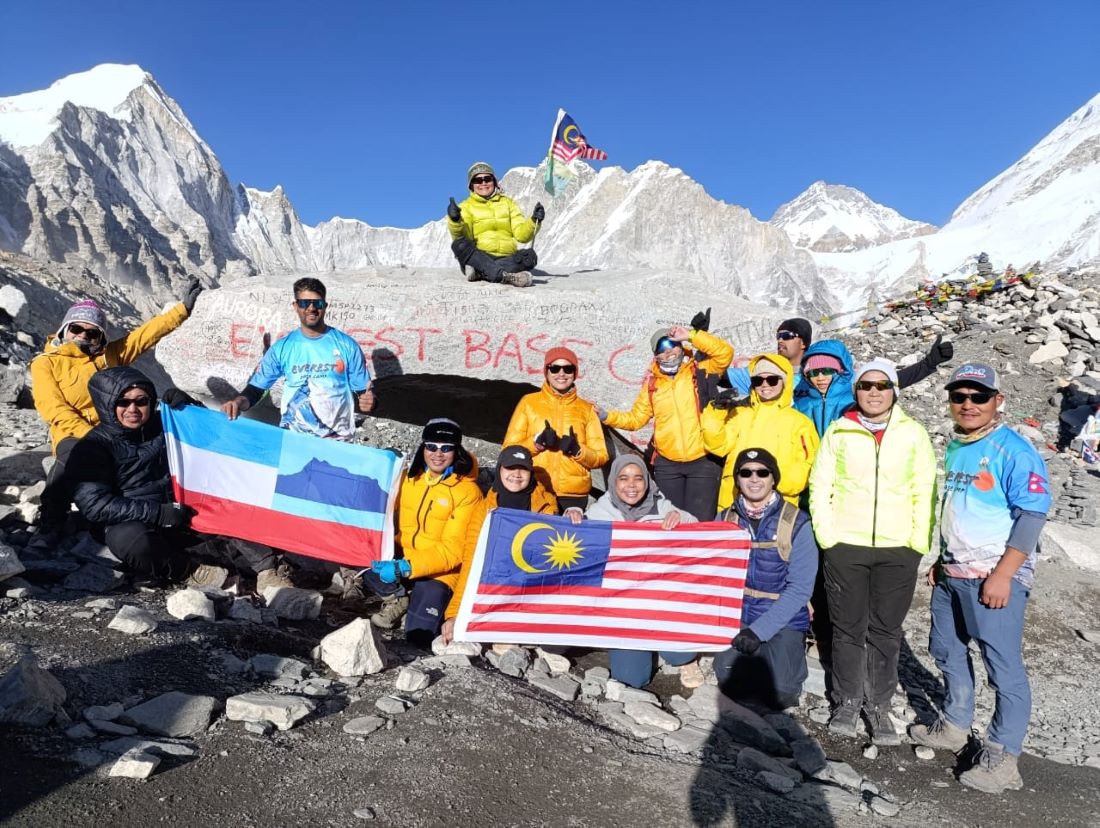
The Everest Base Camp Trek takes you through the Khumbu Valley in northeastern Nepal, following the Dudh Koshi River from Lukla towards the foot of the world’s highest mountain. The route passes through Phakding, Namche Bazaar, Tengboche, Dingboche and Lobuche before reaching Everest Base Camp at 5,364 metres. Most itineraries also include an early morning climb to Kala Patthar at 5,545 metres for a closer view of Everest.
For 2027, the main trekking seasons are spring (March to May) and autumn (September to November). Winter departures are also possible, although colder nights, snowfall and changing trail conditions require more preparation. The trek generally takes 12–14 days from Kathmandu, depending on the itinerary, acclimatization days and flight arrangements.
The distance is not the only challenge. Walking above 4,000 metres, sleeping at increasing elevations and spending a night at Gorak Shep require a sensible pace. A well-planned itinerary should allow enough time for the body to adjust rather than treating Everest Base Camp as a destination to reach as quickly as possible.
This guide explains what to expect on the Everest Base Camp Trek 2027, including the route, daily itinerary, cost, permits, Lukla flights, accommodation, altitude preparation and seasonal conditions.
What Is the Everest Base Camp Trek?
The Everest Base Camp Trek is a high-altitude trekking journey in Nepal’s Khumbu region. It follows the traditional route from Lukla through Sherpa settlements to Everest Base Camp at 5,364 metres, with Kala Patthar at 5,545 metres as the highest point on most standard itineraries.
Everest Base Camp is located on the southern side of Mount Everest, within the Khumbu region of Solukhumbu district. The journey usually starts with a flight to Lukla, followed by several days of walking through river valleys, pine forests, suspension bridges and mountain villages. As the route gains elevation, the landscape changes from relatively green lower valleys to open alpine terrain and glacial surroundings.
Namche Bazaar is the main trading centre of the region and an important acclimatization stop. Further along the trail, Tengboche is known for its monastery and views of Ama Dablam. Dingboche provides another opportunity to adjust to the altitude before the trail continues towards Lobuche and Gorak Shep.
The final approach to Everest Base Camp follows uneven glacial moraine. Kala Patthar, rather than Base Camp itself, is generally the better place to see the upper mountain clearly. From its summit, trekkers can look towards Everest, Nuptse, Lhotse and the surrounding peaks.
Everest Base Camp Trek at a Glance
| Trek information | Details |
| Country | Nepal |
| Region | Khumbu, Solukhumbu |
| Starting point | Lukla |
| Ending point | Lukla |
| Duration | 12–14 days |
| Highest trekking point | Kala Patthar, 5,545 m |
| Everest Base Camp | 5,364 m |
| Difficulty | Challenging |
| Walking hours | Around 5–7 hours daily |
| Accommodation | Teahouses and mountain lodges |
| Meals | Local and international teahouse meals |
| Main trekking seasons | Spring and autumn |
| Trekking style | Guided or organised trekking |
| Main mountain views | Everest, Lhotse, Nuptse, Ama Dablam and Thamserku |
Elevations and walking times are approximate. Actual walking time depends on the itinerary, weather, trail conditions and individual pace.
Where Does the Everest Base Camp Trek Start?
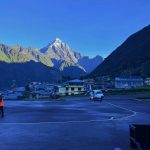
The standard Everest Base Camp Trek starts in Lukla, a mountain town reached by a short flight from Kathmandu or Manthali in Ramechhap. From Lukla, the trail follows the Dudh Koshi Valley towards Namche Bazaar.
The usual flight takes approximately 30–35 minutes from Kathmandu when direct flights operate. During busy trekking periods, flights may operate from Manthali Airport in Ramechhap instead.
Kathmandu to Lukla
Lukla’s Tenzing-Hillary Airport sits at approximately 2,860 metres. It is the main air gateway to the Everest region.
Flights operate in small aircraft, and schedules depend heavily on visibility and weather conditions. Cloud cover, strong winds and poor visibility can delay or cancel departures.
During peak spring and autumn periods, travellers may need to drive from Kathmandu to Manthali before taking the flight to Lukla.
Why Is Ramechhap Used for Lukla Flights?
Ramechhap provides an alternative departure point during busy trekking seasons when air traffic at Kathmandu becomes congested. For travellers, the change means an early road departure, sometimes in the middle of the night, to reach Manthali in time for the morning flight.
For spring and autumn 2027, check the flight arrangements close to your departure date. Seasonal operating arrangements can change, and the schedule for one year should not automatically be assumed to apply to the next.
Keep at least one additional day after your planned return from Lukla before booking an international departure. Two spare days provide a more comfortable margin if weather interrupts flights.
days feel relatively easy, while others become demanding because of elevation rather than distance.
Everest Base Camp Trek 2027 – 14 Days Itinerary
A 14-day itinerary provides time for two acclimatization stops, a visit to Everest Base Camp, a climb to Kala Patthar and a return to Lukla. It is a practical option for trekkers who want to follow the standard route without rushing the higher sections.
The following itinerary starts and finishes in Kathmandu. Walking times are estimates and do not include long sightseeing stops.
Day 1: Arrival in Kathmandu – 1,400 m
You will arrive at Tribhuvan International Airport, where a representative from our trekking agency meets you and transfers you to the hotel.
After checking in, use the remaining time to rest and organise your trekking equipment. Your guide can check your clothing, boots and luggage before the journey to Lukla.
Day 2: Kathmandu to Lukla and Trek to Phakding – 2,610 m
You need to take an early flight to Lukla, either from Kathmandu or Manthali depending on the operating schedule. After organising the luggage, you need to begin walking towards Phakding.
The trail passes through Chaurikharka and several small settlements before descending towards the Dudh Koshi River. Suspension bridges and stone paths are part of the first day’s walk.
Day 3: Phakding to Namche Bazaar – 3,440 m
You will follow the Dudh Koshi River through pine forests and villages towards Monjo. After entering Sagarmatha National Park and completing the necessary checks, continue to Jorsalle.
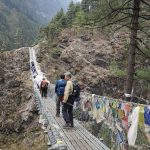
The trail crosses several suspension bridges, including the well-known Hillary Bridge. Beyond the river crossing, the route climbs steadily towards Namche Bazaar.
The uphill section is demanding, especially for trekkers who have just arrived from lower elevations. Take regular breaks rather than trying to maintain a fast pace.
Day 4: Acclimatization Day in Namche Bazaar – 3,440 m
A short acclimatization hike towards Syangboche, the Everest View area or Khumjung can be included, depending on your fitness and how you feel.
Use the afternoon to rest, check your equipment and prepare for the next section of the route.
Do not treat the acclimatization day as an opportunity to cover as much distance as possible. A steady hike followed by a night at the same altitude is more useful than exhausting yourself.
Day 5: Namche Bazaar to Debuche – 3,860 m
Leave Namche and follow the hillside trail towards Kyangjuma and Phunki Tenga. The first section has gradual ups and downs, with views across the valley.
From Phunki Tenga, the trail climbs through forest towards Debuche. The final ascent can feel tiring because of the elevation, but the walking distance is manageable with regular breaks.
If time permits, visit Tengboche Monastery and learn about its role in the local Sherpa community.
Day 6: Debuche to Dingboche – 4,410 m
You will continue through Debuche and cross the Imja Khola before climbing towards Pangboche. The landscape becomes more open as the trail moves beyond the forest.
The route passes traditional settlements and agricultural fields before reaching Dingboche. Stone walls protect the fields from wind and help define the cultivated land at this elevation.
Day 7: Acclimatization Day in Dingboche – 4,410 m
You will spend another day adjusting to the altitude. A popular option is a gradual hike towards Nangkartshang Hill, which provides views of the surrounding mountain valleys.
The hike is optional. Your guide should consider your condition, previous symptoms and walking ability before recommending the higher viewpoint. Return to Dingboche for the overnight stay.
Day 8: Dingboche to Lobuche – 4,940 m
The trail climbs gradually towards Dughla, also known as Thukla. After reaching the area of stone memorials, continue uphill along the moraine.
The memorials commemorate climbers and other people who died in the Everest region. Take time here, but remember that the route continues to a higher overnight altitude. From the memorial area, follow the trail towards Lobuche.
Day 9: Lobuche to Gorak Shep and Everest Base Camp – 5,364 m
Leave Lobuche and follow the trail beside the Khumbu Glacier towards Gorak Shep. After checking into the teahouse and having a meal, continue towards Everest Base Camp if weather, health and timing allow.
The final section crosses uneven ground and rocky moraine. The walking pace is slower than on the lower trail, and the terrain requires careful footing.
At Base Camp, you can see the glacier and the expedition area. You will return to Gorak Shep for the night.
Day 10: Gorak Shep to Kala Patthar and Descend to Pheriche – 4,250 m
You need to start early for the climb to Kala Patthar for the sunrise. The ascent is steep, and the high altitude makes even a short section physically demanding.
From the viewpoint, trekkers can see Mount Everest, Nuptse, Lhotse and other peaks in the Khumbu. After returning to Gorak Shep, have breakfast and begin descending towards Pheriche. The descent reduces the sleeping altitude, which is beneficial after the higher nights.
Day 11: Pheriche to Namche Bazaar – 3,440 m
You will retrace the route through the Imja Khola valley, passing Pangboche, Tengboche and Phunki Tenga before climbing towards Namche.
Although the direction is mostly downhill, there are several uphill sections. Take care on loose stone paths and avoid rushing simply because you are descending.
Day 12: Namche Bazaar to Lukla – 2,860 m
Leave Namche and descend towards Monjo and Phakding. You will cross the same suspension bridges and follow the Dudh Koshi Valley back towards Lukla.
The final uphill section before reaching Lukla can be tiring, particularly after several days of walking. Once there, meet the trekking crew and prepare for the return flight.
Day 13: Lukla to Kathmandu
Take the scheduled return flight to Kathmandu or Manthali, depending on the flight arrangements. After arriving, transfer to your hotel and spend the rest of the day resting.
Day 14: Departure from Kathmandu
This will be the endo of your trekking days and you will be transferred to Tribhuvan International Airport for your international departure. If your flight schedule allows, you can spend the remaining time exploring Kathmandu.
Note: This is a standard 14-day planning outline, not a guarantee of fixed flight times or walking durations. Flight delays, illness, weather and trail conditions may require changes. Keep additional days outside the trekking itinerary where possible.
If you have extra days in Nepal, you can extend the days for visiting the valley or go to Chitwan or Pokhara for small trip too.
Best Time for Everest Base Camp Trek in 2027
March to May and September to November are the main trekking periods for Everest Base Camp in 2027. Spring is suitable for trekkers who want to experience the climbing season, while autumn generally offers cooler, drier conditions and clear mountain views.
The weather can change quickly in the mountains, so even a well-chosen month cannot guarantee clear skies every day.
Spring (March–May)
Spring is one of the busiest periods for the Everest Base Camp Trek. Temperatures gradually become warmer, and the lower sections of the trail begin to show signs of the changing season.
March can still bring cold mornings and snowfall at higher elevations. Conditions generally become warmer through April and May, although nights around Lobuche and Gorak Shep remain cold.
Spring suits travellers who want to see the Everest region during its main climbing period and are comfortable with busier trails and accommodation.
Autumn (September–November)
Autumn is another major season for trekking in the Everest region. After the monsoon, the landscape gradually clears, and visibility often improves.
September can still experience rain and cloud, particularly during the early part of the month. October is especially popular, so accommodation and flights should be arranged in advance.
Autumn is a good choice for trekkers who prioritise clear mountain views and relatively predictable trekking conditions.
Winter (December–February)
Winter offers a quieter experience, but the conditions are considerably colder at higher elevations.
The lower route towards Namche Bazaar may remain accessible, while snowfall can affect the trail above Dingboche and around Gorak Shep. January is generally colder than December, and February can bring changing conditions as spring approaches.
Winter is better suited to trekkers with previous cold-weather experience who can travel with a flexible itinerary and appropriate equipment. It is not the easiest season for a first high-altitude trek.
Monsoon (June–August)
The monsoon is generally the least suitable season for the standard Everest Base Camp Trek.
Rainfall affects the lower valleys, while cloud cover can interrupt Lukla flights and limit mountain views. Landslides and slippery paths may also affect access in some areas.
The higher Khumbu region receives less rainfall than Nepal’s southern hills in some weather patterns, but that does not make the entire route reliable during the monsoon.
Which Month Should You Choose in 2027?
| Month | Conditions | Recommendation |
| January | Very cold, possible snow | Experienced winter trekkers |
| February | Cold, gradually changing conditions | Flexible winter departures |
| March | Cold at altitude, spring begins | Suitable with warm gear |
| April | Main spring trekking period | Excellent choice |
| May | Warmer, active climbing season | Good, with possible pre-monsoon cloud |
| June | Monsoon begins | Generally avoid |
| July | Wet lower trails | Generally avoid |
| August | Monsoon conditions | Generally avoid |
| September | Weather improving | Better towards late September |
| October | Main autumn season | Excellent choice |
| November | Clear conditions, colder nights | Excellent choice |
| December | Cold, quieter trails | Experienced trekkers |
April and October are strong choices for the Everest Base Camp Trek in 2027. If you prefer fewer crowds, consider early November or late March, provided you are prepared for colder conditions.
How Difficult Is the Everest Base Camp Trek?
The Everest Base Camp Trek is challenging because of its altitude, consecutive walking days, steep ascents and basic accommodation at higher elevations. It does not require technical climbing skills, but trekkers need good physical fitness and enough time to acclimatize.
Many people assume the trek is difficult because of its distance. In practice, the altitude is a greater concern than the total number of kilometres. Your breathing becomes faster, your walking pace slows and ordinary uphill sections can require more frequent breaks.
Main Challenges Along the Route
- High altitude
The route climbs from Lukla at approximately 2,860 metres to Kala Patthar at 5,545 metres. At these elevations, the amount of oxygen available with each breath is lower than at sea level.
Even fit trekkers can experience altitude-related symptoms.
- Long walking days
Some days involve six to eight hours of walking, particularly when visiting Everest Base Camp or descending from Namche to Lukla.
The distance may not seem excessive on a map, but uneven paths and elevation gain make the journey more demanding.
- Repeated uphill and downhill sections
The route includes several steep climbs, especially between Jorsalle and Namche, Phunki Tenga and Tengboche, and Dughla and the memorial area above it.
The return journey also involves uphill sections despite the overall descent.
- Cold temperatures
Temperatures drop significantly at higher elevations. Early morning starts, cold bedrooms and freezing conditions around Gorak Shep can make the trek uncomfortable without appropriate clothing.
- Basic facilities
Teahouses become simpler as you climb higher. Private bathrooms, hot showers, reliable electricity and internet access are not guaranteed.
Can Beginners Complete the Everest Base Camp Trek?
Yes. Beginners can complete the trek if they prepare properly and follow a suitable itinerary. Previous Himalayan trekking experience is helpful but not compulsory. What matters more is your ability to walk for several consecutive days, manage uphill sections and adjust your pace at altitude.
Before departure, you must practise:
- Walking for 2–3 hours on consecutive days.
- Climbing stairs and hills.
- Walking with a loaded daypack.
- Maintaining a steady pace rather than walking too quickly.
- Using trekking poles on uneven and downhill sections.
A person who regularly hikes at lower elevations may be better prepared than someone who relies only on gym workouts.
Is the Everest Base Camp Trek Harder Than Annapurna Base Camp?
The Everest Base Camp Trek is generally more demanding because it reaches a higher altitude and involves more time above 4,000 metres.
Annapurna Base Camp reaches approximately 4,130 metres, while Everest Base Camp is at 5,364 metres and Kala Patthar reaches 5,545 metres.
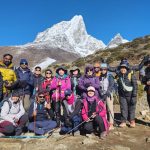
Both treks involve sustained walking, but altitudA scenic view of the Everest region in Nepal, showcasing the Himalayan landscape and mountain trails along the Everest Base Camp trekking route. The image represents the mountain scenery and trekking experience of the Everest Base Camp Trek 2027.e acclimatization is a particularly important part of the Everest itinerary.
Altitude Sickness on the Everest Base Camp Trek
Altitude sickness is a genuine risk on the Everest Base Camp Trek, particularly above 3,000 metres. A gradual ascent, acclimatization days and early recognition of symptoms are essential.
Altitude sickness, also called acute mountain sickness (AMS), can affect anyone regardless of age, gender or physical fitness. Being physically strong does not guarantee that you will adjust to altitude quickly.
As you climb higher, the air pressure decreases and less oxygen is available with each breath. Your body needs time to adapt.
Common Symptoms of Altitude Sickness
The common symptoms of Altitude Sickness During Everest Base Camp Trek 2027 are:
- Headaches.
- Nausea or vomiting.
- Dizziness.
- Loss of appetite.
- Unusual tiredness.
- Difficulty sleeping.
Mild symptoms should not be ignored, especially if they appear after gaining elevation. More serious altitude illnesses include high-altitude pulmonary edema (HAPE) and high-altitude cerebral edema (HACE).
How to Reduce the Risk
- Follow a gradual itinerary
Avoid rapid increases in sleeping altitude. The two acclimatization days in the standard itinerary are important, not spare sightseeing days.
- Walk at a manageable pace
A slower walking pace allows you to manage your breathing and energy more effectively.
- Drink enough fluids
Maintain regular fluid intake throughout the day. Avoid relying on alcohol as a way to relax after walking.
- Report symptoms to your guide
Do not hide a headache or nausea because you are worried about delaying the group. Your guide needs to know how you are feeling.
- Descend when necessary
If symptoms worsen or serious signs appear, descending is more important than reaching the planned overnight stop.
Do not take altitude medication simply because another trekker recommends it. Discuss preventive medication, including acetazolamide, with a qualified travel-health professional before departure.
Everest Base Camp Trek Cost in 2027
A guided Everest Base Camp Trek in 2027 may cost approximately USD 1,400–2,500 per person depending on group size, accommodation, services and itinerary. International flights, personal expenses, insurance and some additional costs are normally separate.
The total cost depends on how you organise the trek. A guided group departure, private trek and premium lodge arrangement can have substantially different prices.
Estimated Everest Base Camp Trek Budget
| Expense | Estimated cost per person |
| Guided trekking package | $1,400–$2,500 |
| Nepal tourist visa | Depends on duration and nationality |
| International flights | Depends on departure country |
| Travel and rescue insurance | Depends on coverage |
| Personal drinks and snacks | Variable |
| Wi-Fi and charging | Variable |
| Hot showers and personal extras | Variable |
| Guide and porter tips | Budget separately |
What Is Usually Included in an EBC Trekking Package?
A standard guided package may include:
- Airport pickup and drop-off in Kathmandu.
- Hotel accommodation in Kathmandu as specified.
- Domestic flights to and from Lukla.
- Licensed trekking guide.
- Porter service.
- Teahouse accommodation during the trek.
- Three meals a day during trekking.
- Required trekking permits and entry fees.
- Ground transportation specified in the itinerary.
- Basic trekking coordination and local support.
What Is Usually Excluded?
Common exclusions include:
- International airfare.
- Nepal visa fees.
- Personal travel and rescue insurance.
- Personal trekking equipment.
- Drinks, snacks and bottled water.
- Hot showers and device charging.
- Wi-Fi.
- Laundry.
- Tips for guides and porters.
- Extra hotel nights caused by delays.
- Helicopter evacuation or additional transport.
How Much Cash Should You Carry?
You should carry enough Nepalese rupees for personal expenses throughout the trek. Namche Bazaar has banking facilities and ATMs, but you should not rely on them being available or working when needed.
Facilities become increasingly limited farther up the trail. You may need cash for drinks, charging, showers, snacks and other personal expenses.
Permits Required for Everest Base Camp Trek 2027
The Everest Base Camp Trek requires the relevant entry permits for the Khumbu region, including Sagarmatha National Park entry. The Khumbu Pasang Lhamu Rural Municipality entry fee also applies.
There are several administrative requirements for trekking in the Everest region.
Sagarmatha National Park Entry Permit
The Everest Base Camp route enters Sagarmatha National Park near Monjo.
The Nepal Tourism Board currently lists the entry fee for foreign visitors at NPR 3,000 per person and NPR 1,500 for SAARC nationals. These are the published rates available at now and should be checked again before your 2027 departure.
Khumbu Pasang Lhamu Rural Municipality Entry Fee
Trekkers also need to pay the local entry fee administered by Khumbu Pasang Lhamu Rural Municipality.
A 2027 planning estimate lists NPR 3,000 for foreign visitors, but travellers should confirm the applicable fee and payment arrangements with the municipality or our trekking agency before travelling.
Accommodation on the Everest Base Camp Trek
Accommodation on the standard Everest Base Camp route is mainly in local teahouses and mountain lodges. Rooms are usually twin-sharing, with shared bathrooms becoming more common at higher elevations. The facilities change as the route climbs.
Lower Trail: Lukla, Phakding and Namche
Accommodation in Lukla, Phakding and Namche generally offers more facilities than the higher settlements. Depending on the lodge, you may find:
- Twin-sharing bedrooms.
- Attached bathrooms in selected rooms.
- Dining rooms with heating stoves.
- Hot showers.
- Charging facilities.
- Wi-Fi access.
Higher Trail: Tengboche, Dingboche and Lobuche
Facilities become more basic above Namche. Rooms are generally simple, with basic beds, mattresses and blankets. Shared bathrooms are common, and hot showers or charging facilities may involve additional costs.
At higher elevations, hot water can be limited, especially when temperatures are low.
Gorak Shep
Gorak Shep has particularly basic accommodation because of its location at approximately 5,164 metres.
Expect simple rooms, limited facilities and cold nights. Do not plan your trek assuming you will have the same comfort available in Namche.
You will need a sleeping bag suitable for cold mountain conditions, even if your lodge provides blankets. The temperature inside a basic room can become very low overnight.
Food and Drinking Water During the Trek
Teahouses along the Everest Base Camp route serve local Nepali meals and familiar international dishes. Dal bhat, noodles, rice, soup, potatoes, eggs, pancakes and porridge are common choices.
Dal bhat is one of the most practical meals for trekkers because it includes rice, lentil soup and vegetable accompaniments. Many teahouses offer refills, although availability varies.
As you move higher, food prices generally increase because supplies must be transported from lower settlements.
Is Drinking Water Available?
Yes. Teahouses provide drinking water, but travellers should use safe treatment methods.
You must drink boiled water or purified water. Avoid drinking untreated water directly from rivers, streams or taps. Carry a reusable bottle or hydration system and plan your water supply before leaving each settlement.
What Should You Pack for Everest Base Camp in 2027?
Pack clothing in layers, broken-in trekking boots, cold-weather protection, rain protection, a suitable sleeping bag and essential personal equipment. Your packing list should reflect the season and the expected conditions at higher elevations.
A common packing mistake is bringing too many casual clothes while overlooking the equipment needed for cold mornings and long walking days.
Clothing
- Moisture-wicking base layers.
- Fleece or insulating mid-layer.
- Warm down jacket.
- Waterproof and windproof outer jacket.
- Waterproof trousers.
- Trekking trousers.
- Thermal leggings.
- Warm gloves.
- Sun hat and warm beanie.
- Several pairs of trekking socks.
Footwear
- Broken-in trekking boots.
- Comfortable camp shoes or sandals.
- Spare trekking socks.
- Gaiters if conditions require them.
Equipment
- 40–50 litre daypack, depending on your arrangements.
- Sleeping bag suitable for the season.
- Trekking poles.
- Headlamp with spare batteries.
- Sunglasses with adequate UV protection.
- Sunscreen and lip balm.
- Water bottles.
- Water purification tablets or filter.
Personal Items
- Personal medications.
- Basic first-aid supplies.
- Hand sanitiser.
- Toiletries.
- Passport and permit copies.
- Cash in Nepalese rupees.
- Power bank.
- Travel insurance documents.
Do You Need Crampons for Everest Base Camp?
However, snow and ice can affect the higher trail during winter or after heavy snowfall. Microspikes or other traction equipment may be useful if your guide assesses that the conditions require them.
Do not purchase technical climbing equipment without understanding whether it is actually needed for your departure.
Do You Need a Guide and Porter for Everest Base Camp?
A licensed trekking guide is required under the Nepal Tourism Board’s published trekking provisions for the Everest Base Camp route. Hiring a porter is optional, but it can make the journey more manageable.
What Does a Trekking Guide Do?
A guide generally helps with:
- Route navigation and daily walking arrangements.
- Selecting suitable rest stops.
- Coordinating teahouse accommodation.
- Monitoring trekkers for altitude-related symptoms.
- Communicating with local service providers.
- Coordinating emergency arrangements when necessary.
A guide familiar with the Khumbu can also explain local customs, Buddhist traditions, monasteries and the history of Sherpa settlements.
Do You Need a Porter?
A porter carries the main trekking duffel, allowing you to walk with a smaller daypack.
A common arrangement is one porter for two trekkers, with the combined load agreed in advance. Ask your operator about the porter-to-trekker ratio, weight limit, insurance and equipment provided to the porter.
Your porter should have appropriate clothing and equipment for the conditions. Fair wages, reasonable carrying limits and suitable insurance are important parts of responsible trekking.
Is Everest Base Camp Trek Worth Doing in 2027?
Yes, the Everest Base Camp Trek is a worthwhile choice for travellers who want a challenging Himalayan journey, are prepared for high altitude and have enough time for a proper itinerary.
The experience is not limited to reaching Base Camp. Much of the journey takes place between the villages and valleys of the Khumbu, where you experience the region’s mountain communities and changing landscapes.
The climb from Phakding to Namche, the acclimatization walks around Dingboche, the approach to Lobuche and the final walk across the Khumbu Glacier each present different challenges.
It is also important to have realistic expectations. Everest Base Camp is not a luxury walking holiday. Higher-altitude accommodation is basic, temperatures can be uncomfortable and flight delays are part of travelling in this mountain region.
If you have enough time, reasonable fitness and a flexible travel schedule, 2027 offers several opportunities to complete the trek during the main spring and autumn seasons.
Book Your Everest Base Camp Trek with Sali Trekking
Planning an Everest Base Camp Trek requires more than choosing a departure date. Flight arrangements, acclimatization, accommodation, permits and local support all affect how the journey works.
Sali Trekking is a locally owned trekking company based in Kathmandu, established Saligram Aryal. Our team works with local Nepali guides and trekking staff who know the Khumbu route and the practical arrangements required for the journey.
Our standard Everest Base Camp Trek follows a 14-day itinerary, with twin-sharing accommodation and organised trekking support.
Before booking, travellers can discuss:
- Suitable departure dates for spring and autumn 2027.
- Group and private trekking arrangements.
- Accommodation and meal inclusions.
- Guide and porter arrangements.
- Lukla flight and Ramechhap transfer logistics.
- Additional days for flight delays.
- Travel insurance and altitude preparation.
We recommend choosing an itinerary that gives you enough time to acclimatize rather than shortening the trek simply to reduce the number of days.
Explore the Everest Base Camp Trek package by Sali Trekking and contact our team to discuss your 2027 departure.
Frequently Asked Questions About Everest Base Camp Trek 2027
- How much does the Everest Base Camp Trek cost in 2027?
A guided Everest Base Camp Trek in 2027 generally costs around USD 1,400–2,500 per person with a Nepal-based trekking company. The price depends on group size, accommodation, meals, guide and porter services, permits and flight arrangements. International airfare, insurance, tips and personal expenses are usually additional.
- How many days does it take to complete the Everest Base Camp Trek?
The standard Everest Base Camp Trek takes approximately 12–14 days from Kathmandu. A 14-day itinerary allows time for two acclimatization stops, a visit to Base Camp, a climb to Kala Patthar and the return journey to Lukla. Additional days are recommended for possible flight delays.
- What is the best month for Everest Base Camp Trek in 2027?
April and October are two of the best months for the Everest Base Camp Trek in 2027. April falls within the main spring climbing season, while October generally offers clear skies and favourable autumn trekking conditions. November is another good option, although temperatures become colder.
- How difficult is the Everest Base Camp Trek for beginners?
The Everest Base Camp Trek is challenging but achievable for beginners with good physical preparation. It involves several consecutive walking days, steep uphill sections and high-altitude conditions. Previous trekking experience is helpful but not essential if you follow a suitable itinerary and allow enough time for acclimatization.
- What is the highest altitude reached during the Everest Base Camp Trek?
Kala Patthar, at approximately 5,545 metres, is the highest point on most standard Everest Base Camp itineraries. Everest Base Camp itself is at 5,364 metres. The early morning climb to Kala Patthar is physically demanding because of the altitude and steep trail.
- Can I trek to Everest Base Camp without climbing experience?
Yes. You do not need mountaineering or technical climbing experience to reach Everest Base Camp. The standard route follows established trekking trails and does not require ropes, ice axes or technical climbing skills under normal conditions. Physical fitness and altitude preparation are important.
- Is a guide compulsory for Everest Base Camp Trek in 2027?
The Nepal Tourism Board’s published trekking provisions list Everest Base Camp among the routes requiring a licensed trekking guide and an agency-issued TIMS card. Confirm the latest applicable regulations with a registered trekking agency before your 2027 departure.
- What permits are required for Everest Base Camp Trek?
The main requirements include Sagarmatha National Park entry and the Khumbu Pasang Lhamu Rural Municipality entry fee. The Nepal Tourism Board also lists TIMS requirements for the Everest Base Camp route. Fees and administrative rules should be checked before travelling.
- Is altitude sickness common on the Everest Base Camp Trek?
Altitude sickness is a recognised risk, particularly above 3,000 metres. Symptoms can include headaches, nausea, dizziness and unusual fatigue. A gradual ascent, acclimatization days and proper monitoring help reduce the risk, but no itinerary can eliminate it completely.
- Can I do the Everest Base Camp Trek in winter?
Yes. The trek is possible during December, January and February, but temperatures are significantly lower and snowfall can affect higher sections of the route. Trekkers should have suitable cold-weather equipment and a flexible itinerary. Winter is generally more suitable for people with previous mountain experience.
- Is there Wi-Fi and mobile network coverage on the Everest Base Camp route?
Mobile networks and Wi-Fi are available in some settlements, including Lukla and Namche Bazaar, but coverage becomes less reliable at higher elevations. Many teahouses provide Wi-Fi for an additional fee. Connectivity should not be relied upon throughout the trek.
- What kind of accommodation is available during the Everest Base Camp Trek?
Accommodation is mainly in teahouses and local mountain lodges. Most rooms have twin beds, basic furniture and shared bathrooms. Facilities are generally better in Lukla and Namche Bazaar, while higher settlements such as Lobuche and Gorak Shep have more basic accommodation.
- Can I visit Everest Base Camp and Kala Patthar on the same day?
Yes, some itineraries combine Everest Base Camp and Kala Patthar into one day, but this creates a long and physically demanding schedule. The standard itinerary in this guide visits Base Camp first and Kala Patthar the following morning. This allows a more manageable schedule at high altitude.
- How much should I train before the Everest Base Camp Trek?
Ideally, begin training 8–12 weeks before departure. Focus on cardiovascular endurance, uphill walking, stair climbing and leg strength. Practising consecutive walking days is particularly useful because the trek involves repeated daily walks at increasing elevations.
- What happens if my Lukla flight is cancelled?
If a Lukla flight is cancelled because of weather, travellers may need to wait for the next available flight or consider alternative transport arrangements. Helicopter services may be possible at an additional cost. Keep one or two extra days in your Nepal travel schedule to reduce the risk of missing your international flight.
