
Is Mardi Himal Trek Suitable for Beginners?
The Mardi Himal Trek can suit fit beginners who are comfortable walking uphill for several hours a day and are prepared for high altitude. It usually takes around 4–6 walking days from Pokhara, depending on the route and itinerary. You do not need technical climbing experience, but you should prepare for steep sections, cold mornings, and basic teahouse accommodation.
I started working in Nepal’s mountains as a porter in 1996 and became a licensed trekking guide in 2002. When I advise someone planning their first Himalayan trek, I ask about their fitness and walking experience rather than simply looking at the number of days. Mardi Himal is a reasonable choice for a first trek if you prepare properly and allow enough time to walk at a steady pace.
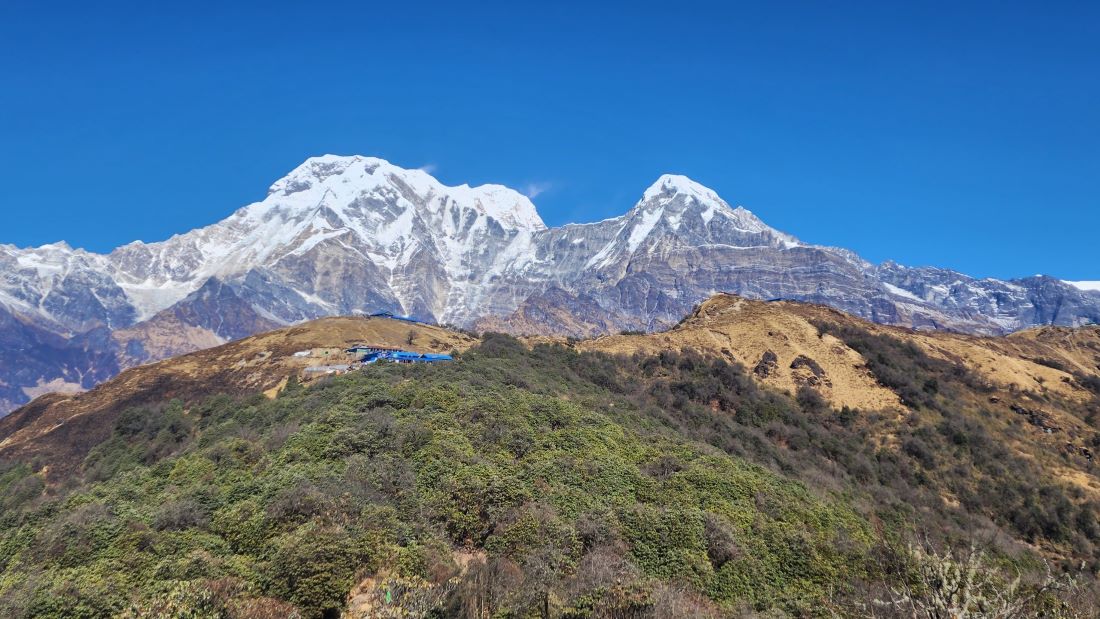
The trail begins among villages and forest before climbing towards High Camp and an exposed ridge beneath Machhapuchhre, also known as Fishtail Mountain. The upper section offers views of Machhapuchhre, Annapurna South, and Hiunchuli when the weather is clear.
The main challenge is the steady ascent, followed by walking at elevations above 4,000 metres. Cold, wind and altitude can make the upper section harder than the lower forest trails. A sensible pace and a suitable itinerary matter more than trying to finish quickly.
For the route, inclusions, and current price, see our Mardi Himal Trek package.
What Is the Mardi Himal Trek for Beginners Like?
The Mardi Himal Trek is a short teahouse trek in Nepal’s Annapurna region, with Pokhara serving as the main gateway. The trail passes through villages and forest, including areas known for rhododendrons, before reaching the open ridge above the tree line.
Forest Camp and Low Camp are surrounded by trees. As you climb higher, the forest thins, temperatures drop, and the trail becomes more exposed to wind. High Camp sits at approximately 3,580 meters and is the usual starting point for an early walk towards the upper viewpoint or the Mardi Himal Base Camp area.
On a clear morning, Machhapuchhre stands ahead of you, with Annapurna South and Hiunchuli also visible. Cloud and weather conditions can affect the views, particularly along the ridge.
Most itineraries include around four to six trekking days from Pokhara, although the exact duration depends on where you start and finish and where you stay overnight. Some routes begin walking from Kande, while others use different starting or finishing points. Check the daily walking schedule and overnight stops before booking, as itineraries can vary between companies.
Mardi Himal Trek Facts
| Trek detail | Information |
| Region | Annapurna, Nepal |
| Main gateway | Pokhara |
| Trek duration | Usually 4–6 walking days from Pokhara |
| High Camp altitude | Approximately 3,580 m |
| Upper viewpoint | Around 4,200 m, depending on the route |
| Mardi Himal Base Camp area | Approximately 4,500 m |
| Difficulty | Moderate |
| Technical climbing | Not required on the standard trekking route |
| Trek style | Teahouse trekking |
| Accommodation | Mountain lodges and teahouses |
| Main mountain views | Machhapuchhre, Annapurna South and Hiunchuli |
| Main permit | Annapurna Conservation Area entry permit |
| TIMS and guide rules | Confirm current requirements before departure |
| Best seasons | Spring and autumn |
Altitude note: The upper viewpoint and Mardi Himal Base Camp are not always the same stopping point. The highest place you reach depends on your route, trail conditions, weather, and condition on the day.

How Difficult Is the Mardi Himal Trek?
Mardi Himal is generally considered a moderate trek. The lower forest sections are manageable for many reasonably fit walkers, but the route becomes more demanding as you climb towards High Camp and the upper ridge.
The main challenges are:
- Steady uphill walking: The trail climbs through forest for much of the lower and middle route.
- Altitude: You reach High Camp at about 3,580 metres before continuing higher the following morning.
- Uneven ground: Depending on conditions, you may encounter stone steps, mud, loose ground and narrow sections.
- Cold and wind: The upper ridge is more exposed than the forest below.
- An early start: The walk towards the upper viewpoint often begins before sunrise and includes a long return and descent.
The upper section can feel harder than its distance suggests. You may be walking more slowly because of the gradient, altitude or cold, even if you have strong legs.
My advice is straightforward: keep a steady pace and do not compete with other trekkers. If you need a break, take one. Reaching the viewpoint later or turning around when conditions are poor, is better than pushing on when you are unwell or the weather is deteriorating.
Mardi Himal Trek Itinerary for Beginners
The Mardi Himal Trek itinerary by Sali Trekking is an eight-day journey from Kathmandu to the Annapurna region and back. The route includes a drive to Pokhara, a gradual climb through Deurali and Forest Camp, an overnight stay at High Camp, and an early-morning hike to Mardi Himal Base Camp at approximately 4,500 metres.
After visiting the upper mountain area, you descend to Siding village and return to Pokhara before travelling back to Kathmandu.
Route: Kathmandu → Pokhara → Deurali → Forest Camp → High Camp → Mardi Himal Base Camp → Siding → Pokhara → Kathmandu
Day 1: Arrival in Kathmandu (1,350 m)
Your journey with Sali Trekking begins when you arrive at Tribhuvan International Airport in Kathmandu. A representative will meet you at the airport and transfer you to your hotel.
After checking in, you can rest or explore the surrounding area. You will have time to check your trekking equipment and prepare your belongings for the journey to Pokhara.
Overnight: Hotel in Kathmandu.
Day 2: Kathmandu to Pokhara (850 m)
After breakfast, you travel from Kathmandu to Pokhara by tourist bus. The journey generally takes around 7–8 hours, depending on traffic and road conditions.
The road follows river valleys and passes through hillside settlements, terraced farmland and small towns. After reaching Pokhara, you check into your hotel and have the rest of the day to relax.
You can also visit Phewa Lake or prepare any remaining equipment before starting the trek.
Overnight: Hotel in Pokhara.
Day 3: Pokhara to Deurali (2,100 m) and Forest Camp (2,550 m)
After breakfast, you leave Pokhara by vehicle and drive towards the trekking starting point. From there, the walking route takes you through the lower hills towards Deurali.
The trail passes through forest, small settlements and sections of stone steps. Deurali, at approximately 2,100 metres, is an important point along the Mardi Himal route.
You continue uphill through rhododendron and oak forest towards Forest Camp. The trail is shaded for much of the way, with occasional openings between the trees.
Forest Camp sits at approximately 2,550 metres. After reaching your teahouse, you can rest and prepare for the next day’s climb.
Overnight: Teahouse at Forest Camp.
Day 4: Forest Camp to High Camp (3,550 m)
Today, you continue climbing through the forest towards the upper ridge of Mardi Himal.
The trail passes through Low Camp and Badal Danda before reaching High Camp. As you gain elevation, the dense forest gradually gives way to more open mountain terrain.
From the higher sections, you can see Machhapuchhre, Annapurna South and Hiunchuli when the weather is clear. The landscape changes noticeably as you approach High Camp, where the route becomes more exposed to wind and changing temperatures.
High Camp is approximately 3,550 metres above sea level. Take your time during the ascent, drink enough water and let your guide know if you experience a headache, nausea or unusual tiredness.
Overnight: Teahouse at High Camp.
Day 5: High Camp to Mardi Himal Base Camp (4,500 m) and Return
This is the main highlight of the Mardi Himal Trek. You start early in the morning and follow the ridge towards the upper viewpoint and Mardi Himal Base Camp.
The trail climbs above 4,000 metres, where the air becomes thinner and the temperature is generally colder. The route includes steep and rocky sections, so a steady pace is important.
As you approach the upper viewpoint and Base Camp area, you get closer views of Machhapuchhre, Annapurna South and the surrounding Himalayan peaks.
Mardi Himal Base Camp is approximately 4,500 metres above sea level. After spending time in the area, you follow the planned descent route towards Siding village.
The descent is long, so conserve your energy during the morning climb. Your guide will assess the weather, trail conditions and your physical condition before proceeding to the upper sections.
Overnight: As arranged in the Sali Trekking itinerary.
Day 6: Siding Village (1,700 m) to Pokhara (850 m)
After reaching Siding village, you leave the mountain trail and travel back to Pokhara by road.
Siding is a traditional village surrounded by terraced fields and green hills. The lower elevation brings warmer temperatures compared with the exposed ridge around High Camp.
After the drive, you arrive in Pokhara and transfer to your hotel. The rest of the day is free to relax after completing the trekking section.
Overnight: Hotel in Pokhara.
Day 7: Pokhara to Kathmandu (1,350 m)
After breakfast, you travel back to Kathmandu by tourist bus. The journey generally takes around 7–8 hours, depending on road and traffic conditions.
Upon arrival, you transfer to your hotel. You can spend the remaining time shopping, exploring Kathmandu or resting before your international departure.
Overnight: Hotel in Kathmandu.
Day 8: Final Departure from Kathmandu
Your eight-day Mardi Himal Trek with Sali Trekking comes to an end today.
Depending on your flight schedule, you will be transferred to Tribhuvan International Airport for your onward journey. If you have additional time in Nepal, you can also arrange an extension to explore other destinations.
This completes your Mardi Himal trekking experience with Sali Trekking.
How High Is the Mardi Himal Trek?
The Mardi Himal Trek reaches approximately 4,500 metres in the Base Camp area. High Camp is around 3,580 metres, while the upper viewpoint commonly visited on the route is around 4,200 metres.
The important issue is not altitude alone. It is how quickly you climb from the lower hills to higher elevations. On this trek, the ascent takes place over only a few days, so beginners need to pay attention to how they feel.
Possible symptoms of altitude sickness include headache, nausea, loss of appetite, dizziness, unusual tiredness and disturbed sleep. Being fit does not guarantee that you will avoid altitude sickness.
Tell your guide if symptoms develop. Do not hide them because you are worried about delaying the group or missing the viewpoint. If symptoms become severe or worsen while resting, do not continue climbing; urgent descent and medical assessment may be necessary.
Read our Altitude Sickness in Nepal guide before your trek to understand the symptoms and why early action matters.
Do Beginners Need Acclimatization on Mardi Himal?
The Mardi Himal Trek is relatively short, and many standard itineraries do not include a separate acclimatization day. That does not mean altitude can be ignored.
You move from the lower hills to High Camp within a few days, then climb higher on the following morning. Walking at a steady pace, allowing enough rest and monitoring symptoms are important.
A few practical points:
- Walk at a pace that allows you to continue without exhausting yourself.
- Drink regularly and eat enough, even if your appetite is lower than usual.
- Avoid alcohol at altitude.
- Tell your guide about headache, nausea or other unusual symptoms.
- Do not climb higher if you are showing signs of altitude sickness.
- Discuss itinerary changes with your guide if you are struggling to adjust.
An extra night at High Camp may be worth discussing if the schedule, weather and group condition allow it. However, an extra night is not a substitute for proper medical decisions if someone develops altitude sickness.
Do not use medication simply to push through symptoms. Ask a qualified medical professional about altitude medication before the trek.
Best Time for Mardi Himal Trek
Spring and autumn are the main trekking seasons for Mardi Himal. Both can provide good walking conditions, but the weather varies from year to year, and the upper ridge can be cold at any time of year.
Spring: March to May
Spring is a popular time to walk through the lower forests, where rhododendrons may flower depending on elevation and timing.
March can still bring cold conditions at higher elevations. April and May are generally warmer, but clouds can build later in the day. An early start can help if clear mountain views are important to you.
Autumn: September to November
Autumn is another popular period. After the monsoon, visibility often improves and lower trails are generally less wet than during the rainy season.
October and November are busy months, so accommodation at small teahouses can fill up. Booking ahead is useful if you have fixed travel dates.
Winter: December to February
Winter brings colder nights, particularly at High Camp. Snow or ice may affect the upper ridge, and conditions can change quickly.
Beginners should not assume that a route is safe just because a trekking company offers it during winter. Ask about recent weather, trail conditions and whether the planned viewpoint walk is suitable for your group.
Monsoon: June to August
The monsoon brings rain to the Annapurna region. Lower forest trails may be muddy and slippery, leeches can be present, and clouds may obscure the mountains.
Trekking can still be possible, but if mountain views are your main reason for choosing Mardi Himal, the monsoon is less predictable. Check the current forecast and trail conditions before making a decision.
What Are the Mardi Himal Teahouses Like?
Accommodation on Mardi Himal is in basic mountain teahouses and lodges. Facilities become simpler as you climb higher, so do not expect hotel-style rooms or the same level of comfort you have in Pokhara.
Rooms are generally simple, often with twin beds, mattresses and blankets. Bathrooms may be shared, particularly at higher elevations. On organized treks, room arrangements depend on availability and the package you book.
The dining room is often the warmest part of the lodge because of the stove. Your room may feel cold after sunset, so keep warm clothing handy rather than packing it away in your duffel bag.
Electricity, charging facilities and Wi-Fi vary between lodges. A power bank is useful, and you should not depend on having a strong internet connection throughout the trek.
If a private bathroom, reliable charging or a particular room arrangement matters to you, ask your trekking company what can realistically be arranged on your dates.
What Food Can Beginners Expect?
Teahouses serve familiar trekking meals such as dal bhat, rice, noodles, pasta, soup, potatoes, eggs, bread and porridge. The menu varies from lodge to lodge.
Dal bhat is a practical choice on long walking days because it provides rice, lentils and vegetables, often with curry or pickle. Breakfast may include eggs, porridge, bread, pancakes or Tibetan-style bread.
Lunch is usually eaten at a teahouse along the trail, while dinner is served where you stay overnight. Food prices generally rise with altitude because supplies must be transported to higher settlements.
Do not try to save money by skipping meals when you are walking for several hours. Carry a few snacks, such as nuts, chocolate, dried fruit or energy bars, in case you need something between meals.
If you have food allergies or dietary requirements, tell your trekking company before departure. Choices may be more limited at higher lodges, so it is useful to plan ahead.
Drinking Water on the Mardi Himal Trek
Carry a reusable water bottle and use a suitable treatment method before drinking water from local sources unless your provider confirms that the water is safe.
A water filter, purification tablets or another reliable treatment system can be useful. Your guide can advise where to refill along the route. Bottled water may be available in some places, but availability and price vary, and reusable bottles help reduce plastic waste.
Do not wait until your bottle is empty before thinking about the next refill. Facilities are more limited on the upper ridge than in the lower settlements.
What Should Beginners Pack for Mardi Himal?
Pack for changing temperatures, not just the weather in Pokhara. You need comfortable walking clothes for the lower forest and warm layers for the cold mornings at High Camp.
A practical packing list includes:
- Trekking boots with good grip, already broken in
- Comfortable trekking trousers and moisture-wicking shirts
- Warm fleece or mid-layer
- Insulated or down jacket
- Waterproof jacket and, when needed, waterproof trousers
- Warm hat and gloves
- Sun hat and sunglasses
- Sunscreen and lip balm
- Headlamp with spare batteries or a charged backup
- Reusable water bottle and water treatment
- Trekking poles
- Personal medicines and basic first-aid items
- Sleeping bag suitable for the season
- Power bank and charging cable
- Toiletries and a small towel
- Snacks for the trail
- Daypack
- Duffel bag if your trekking company provides porter support
If porter service is included, keep heavier items in your main bag. Your daypack should contain water, rain protection, a warm layer, snacks, sunscreen, your phone or camera and personal essentials.
Check with your trekking company about sleeping bags and duffel bags before packing. If equipment is provided, ask about its condition and suitability for the expected temperatures.
How Should Beginners Train for Mardi Himal?
Start preparing several weeks before the trek, especially if you do not usually walk uphill. The aim is to build endurance and become comfortable spending several hours on your feet.
Useful training includes:
- Long walks: Increase the duration gradually instead of suddenly attempting a very long hike.
- Stairs or uphill walking: These helps prepare your legs for repeated climbs.
- Squats, lunges and step-ups: These exercises can improve leg strength.
- Cardio: Brisk walking, cycling or running can improve general endurance.
- Practice hikes: If possible, do a few hikes that include uphill and downhill sections.
Wear the boots you plan to use in Nepal and practise with a daypack. This gives you time to identify rubbing, blisters or uncomfortable straps before the actual trek.
You do not need to train for speed. Build up to walking for several hours at a steady pace, including uphill sections. If you have a medical condition or are unsure whether a training plan is suitable, seek advice from a healthcare professional.
Do Beginners Need a Guide for Mardi Himal?
Before travelling, confirm the current Nepal Tourism Board rules for Mardi Himal, including the licensed-guide and TIMS requirements. Trekking regulations can change, and you should not rely on old advice about whether independent trekking is permitted.
For a beginner, a good guide provides more than navigation. They can explain the route, help arrange accommodation, monitor how the group is coping with the altitude and make decisions when weather or trail conditions change.
This matters most on the exposed upper ridge, where wind, snow or poor visibility can affect the plan. A guide should be prepared to change the schedule or turn around if conditions are unsafe.
When choosing a trekking company, ask who will guide you, what experience the guide has on Mardi Himal, how the company handles altitude concerns and what support is available in an emergency. Do not choose on price alone without checking what is included.
Mardi Himal Trek Permits
The Mardi Himal route lies within the Annapurna Conservation Area. Trekkers should check the current requirements for the Annapurna Conservation Area entry permit and any applicable TIMS documentation before departure.
Permit fees and procedures can change. Confirm the current requirements and fees through the official Nepal Tourism Board or the relevant authorized office rather than relying on an old article or a price quoted for a previous season.
If you book through a registered trekking company, ask whether the necessary permits and documentation are included in your package. Provide your passport details and any documents the company requests in time for arrangements to be made.
How Much Does the Mardi Himal Trek Cost?
The price depends on the number of trekking days, whether the trip is private or part of a group, transport, accommodation, meals, guide and porter arrangements, and the services included.
When comparing Mardi Himal packages, check whether the quoted price covers:
- Transport between Pokhara and the trekking trail
- Teahouse accommodation
- Breakfast, lunch and dinner during the trek
- Licensed trekking guide
- Porter service, if included
- Applicable conservation-area permit and TIMS documentation
- Guide and porter insurance, where applicable
- Government taxes
- Sleeping bag or duffel bag, if provided
- Drinking water or water-treatment arrangements
- Emergency support and assistance
Also check what is excluded. Common exclusions include international flights, Nepal visa, travel insurance, personal drinks and snacks, hot showers, charging fees, tips and personal expenses.
A low headline price does not always mean a lower overall cost. If meals, transport or permits are excluded, you may pay considerably more during the trip. Ask for a clear list of inclusions and exclusions before you book.
Is Mardi Himal Harder Than Annapurna Base Camp?
Neither trek is automatically easier for every person. Mardi Himal is shorter, but its upper ridge and quick ascent to high elevation can make the final section demanding. Annapurna Base Camp usually involves a longer walking commitment and a different route through the Annapurna Sanctuary.
Mardi Himal may suit you better if you want:
- A shorter trekking itinerary
- A route with forest and an exposed high ridge
- A trek starting close to Pokhara
- A high viewpoint beneath Machhapuchhre
- Fewer days away from your other Nepal plans
Annapurna Base Camp may suit you better if you want:
- A longer trek through the Annapurna Sanctuary
- More days of walking through villages and valleys
- A different route and mountain setting
- More time on the trail rather than a compact itinerary
Choose based on the terrain, walking days and altitude not simply because one trek is described as easy. You can compare the routes through our Annapurna Base Camp Trek package before deciding.
Practical Tips for First-Time Mardi Himal Trekkers
A few simple habits can make the trek easier to manage.
- Break in your boots. Wear them on training walks before arriving in Nepal.
- Keep warm clothing accessible. Do not bury your insulated jacket at the bottom of your bag.
- Start each day slowly. Save your energy for the uphill sections ahead.
- Eat regularly. You need enough food for several hours of walking.
- Plan water refills. Do not wait until your bottle is empty.
- Tell your guide when you feel unwell. Headache, nausea and unusual tiredness need attention.
- Protect yourself from the sun. UV exposure can be strong even when the air feels cold.
- Keep important documents secure. Carry your passport, money and essential documents carefully.
- Pack only what you need. Unnecessary weight becomes more noticeable on steep climbs.
- Check conditions before the upper walk. The viewpoint is not worth taking an avoidable risk.
Is Mardi Himal a Good First Himalayan Trek?
Mardi Himal is a reasonable choice for a first Himalayan trek if you are fit enough for several hours of walking each day and understand the demands of altitude. It does not require technical climbing, and the short itinerary can fit into a Nepal trip with limited time.
The part I would not underestimate is the climb from Low Camp towards High Camp and the early walk along the upper ridge. At that elevation, cold, wind and the effort of climbing can affect you even if you are normally active.
You do not need years of trekking experience. Prepare your legs, bring suitable clothing, allow enough time for the route and be honest about how you feel as you gain altitude.
If you prefer a short trek with forest walking and a high ridge beneath Machhapuchhre, Mardi Himal is worth considering. If you want an easier first experience with less time at high elevation, compare it with shorter lower-altitude routes before making your decision.
Mardi Himal Trek for Beginners: Pre-Trek Checklist
Before leaving Pokhara, check that you have:
- Confirmed the itinerary, overnight stops and guide arrangements
- Checked current permit requirements
- Reviewed the weather and upper-trail conditions
- Broken in your trekking boots
- Packed warm and waterproof layers
- Prepared your water bottle and treatment method
- Packed personal medication and essential first-aid items
- Checked your sleeping bag arrangements
- Charged your phone and power bank
- Carried emergency cash and important documents
- Told your guide about any relevant medical concerns
- Reviewed the next day’s walking plan
Once you are on the trail, focus on walking steadily rather than finishing quickly. Eat enough, drink regularly and tell your guide if something does not feel right. Reaching the highest point is only one part of a successful trek; making sensible decisions along the way matters just as much.
Frequently Asked Questions About Mardi Himal Trek for Beginners
1. Is Mardi Himal Trek suitable for first-time trekkers?
Yes. Fit beginners can complete Mardi Himal without previous Himalayan trekking experience. You should prepare for several hours of uphill walking, cold conditions and altitude above 3,500 metres.
2. How many days do you need for Mardi Himal Trek?
Most itineraries take around 4–6 trekking days from Pokhara. The exact duration depends on the starting point, overnight stops and descent route. Packages that include Kathmandu and Pokhara travel take longer overall.
3. How high is Mardi Himal Trek?
High Camp is approximately 3,580 metres. The upper viewpoint is commonly around 4,200 metres, while the Mardi Himal Base Camp area is approximately 4,500 metres. The exact highest point reached varies by itinerary and conditions.
4. Is Mardi Himal Trek difficult?
It is generally considered moderate. The lower forest sections are manageable for many fit walkers, while the climb to High Camp and the early-morning upper ridge walk are more demanding.
5. Can I do Mardi Himal without previous trekking experience?
Yes, if you have reasonable fitness and prepare before the trek. Practise uphill walking, break in your boots and follow a sensible pace. Previous experience does not remove the need to take altitude seriously.
6. Do I need a guide for Mardi Himal Trek?
Check the latest Nepal Tourism Board requirements before travelling. Current rules should be confirmed for licensed guides and applicable TIMS documentation. A guide is also useful for route decisions, altitude monitoring and changing weather.
7. What is the best time for Mardi Himal Trek?
Spring, from March to May, and autumn, from September to November, are the main trekking seasons. October, November and April are popular choices, although mountain weather and visibility can never be guaranteed.
8. Do I need a permit for Mardi Himal Trek?
The route lies within the Annapurna Conservation Area, so an applicable conservation-area entry permit is required. Check the latest TIMS and guide provisions with official sources or your trekking company before departure.
9. What kind of accommodation is available on Mardi Himal?
The trek uses basic teahouses and mountain lodges. Rooms are simple, and bathrooms are often shared, especially at higher elevations. Electricity, charging and Wi-Fi availability vary.
10. What food is available during the trek?
Teahouses commonly serve dal bhat, rice, noodles, pasta, soup, potatoes, eggs, bread and porridge. Menus vary by lodge, and food generally costs more at higher elevations.
11. Do I need a sleeping bag for Mardi Himal?
A warm sleeping bag is recommended because nights at High Camp can be cold. If your trekking company supplies one, confirm its condition and suitability for the season.
12. Can beginners reach Mardi Himal Base Camp?
Many fit beginners reach the upper viewpoint or Base Camp area, but reaching it is not guaranteed. Your condition, the weather, trail conditions and response to altitude should determine whether you continue.
13. What should I pack for Mardi Himal Trek?
Bring trekking boots, warm layers, waterproof clothing, gloves, a hat, sunglasses, sunscreen, a reusable water bottle, water treatment, trekking poles and personal medication. A suitable sleeping bag and headlamp are also useful.
14. Is Mardi Himal Trek possible in winter?
Yes, in suitable conditions, but winter can bring very cold nights, snow and icy sections on the upper ridge. Beginners should check recent conditions with an experienced guide before attempting the higher route.
15. Can I combine Mardi Himal with another trek?
Yes, if you have enough time. You can consider combining it with another route in the Annapurna region, but account for the extra walking days, travel time and recovery. Do not add another trek without checking whether the combined schedule is realistic.
