
The Ten Climbers Lost on Broad Peak Avalanche: What We Know So Far
On July 30, 2026, a team of ten climbers on Broad Peak in Pakistan. It struck around 9 a.m. local time, at roughly 6,579 meters, between Camp II and Camp III on the standard West Ridge route. Some reports say it was actually two avalanches that hit within minutes of each other. Either way, the result is the same. All ten climbers died.
Elite Exped, the guiding company Nirmal Purja co-founded, confirmed his death on Saturday, August 1. The company called it a moment of profound sadness for the whole team. It later confirmed that other members of the expedition had died too, though it held off on naming everyone right away.
Recovery work paused for a day because of heavy snowfall, then picked back up on Saturday. Drone footage and ground teams have now located every victim except Pakistani guide Sohail Sakhi, whose body is still missing.
How many climbers died on Broad Peak?
All ten. The team included five Nepali climbers, one Pakistani guide, and three foreign clients from the United States, Oman, and China, led by Nirmal Purja. Every member of the group died.
What is Broad Peak and why is it so dangerous?
Broad Peak stands 8,051 meters tall in Pakistan’s Karakoram range, just eight kilometers from K2. That makes it the twelfth highest mountain on earth. It gets its name from an unusually wide summit ridge, almost 1.5 kilometers across, with several high points along it: the Main Summit, the Rocky Summit at 8,028m, Broad Peak Central at 8,011m, and a North Summit.
That width is part of the danger. Climbers exhausted from the final push have mistaken the fore summit for the true summit more than once, and the long traverse between high points has caused problems for decades.
An Austrian team led by Marcus Schmuck made the first ascent on June 9, 1957. Hermann Buhl, Kurt Diemberger, and Fritz Wintersteller reached the top with him, without bottled oxygen or high-altitude porters. It’s still considered one of the great alpine style climbs of that era. The celebration didn’t last. Weeks later, Buhl fell through a cornice and died on nearby Chogolisa.
Broad Peak gets called one of the “easier” 8,000 meter peaks, especially next to K2 or Nanga Parbat. The numbers push back on that reputation. Within its first fifty years, the mountain had already recorded 18 deaths across roughly 255 successful summits, and estimates now put its fatality rate somewhere around 5 to 8 deaths for every 100 successful climbs. That’s a serious number, even by 8,000 meter standards. Unstable weather in the Karakoram, avalanche prone slopes, crevasses, and rockfall have all played a part over the years.
The mountain’s first recorded death didn’t come until 1975, on a Polish expedition attempting Broad Peak Central. Five climbers reached that subsidiary summit late in the day, and darkness caught them on the descent. It set an early pattern that would repeat over the decades: the mountain’s real danger often shows up not on the way up, but on the way down, when climbers are tired, low on supplies, and racing weather or daylight.
The 2013 winter attempt is probably the mountain’s most well-known tragedy before this one. A four person Polish team, Maciej Berbeka, Adam Bielecki, Artur Małek, and Tomasz Kowalski, set out to complete the first ever winter ascent of Broad Peak. Bielecki and Małek reached the summit and made it back down safely. Berbeka and Kowalski also summited, but ran into serious trouble on the descent in brutal winter conditions and never made it back to camp. That story later became the subject of the Netflix film Broad Peak, which is now getting renewed attention given what just happened on the same mountain.
Every one of these past accidents shares a thread with what happened on July 30. The West Ridge route between Camp II and Camp III sits below steep, snow loaded slopes that can look stable one hour and let go the next. Climbers and guides who’ve spent years on the mountain describe that stretch as one where you move fast and don’t linger, because there’s nowhere to hide if the slope above decides to move.

How did the Board Peak avalanche happen?
GPS trackers from the climbers tell most of the story. The avalanche hit between 8:57 and 9:30 a.m. at around 6,579 meters. American climber Mallory Geis’s tracker recorded a sudden 543 meter drop. Omani climber Nadhira Al Harthy’s tracker showed an even worse fall, over 1,600 meters, one of the most severe of anyone in the group. Timestamped GPS points show a fast, off route descent for Purja, Geis, and Al Harthy, consistent with being swept down the mountain’s main gully.
Samson Sharaf, a Pakistani mountaineer and mentor to Sohail Sakhi, later looked at drone footage of the site. He described an overhang collapsing above the route, sending the entire snow loaded face down across the traverse the climbers were using.
The team lost contact right after the slide. That kicked off a search and rescue operation across some of the hardest terrain on the planet. Helicopters and ground crews worked together as weather allowed. By Friday, July 31, rescuers had found four bodies, and three were flown down by military helicopter and identified: Mallory Geis, Nadhira Al Harthy, and Pur Bahadur “Yukta” Gurung. A U.S. State Department spokesperson confirmed that same day that an American citizen had died, offering condolences to the families involved.
Heavy snow forced a full day’s pause in the search, which was hard on everyone waiting for word. Once crews got back out on Saturday, they reached a site where drone footage had earlier shown five bodies together, and more remains were carried down. As of the latest update, two victims have been fully recovered along with partial remains believed to belong to a third, and the search for Sohail Sakhi continues.
Who were the ten climbers?
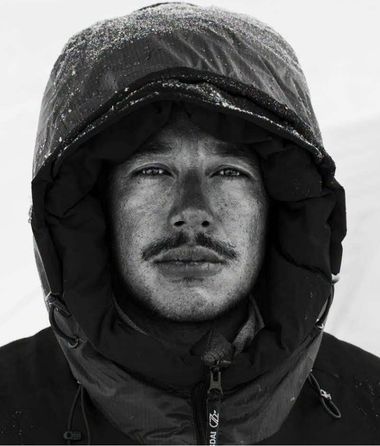
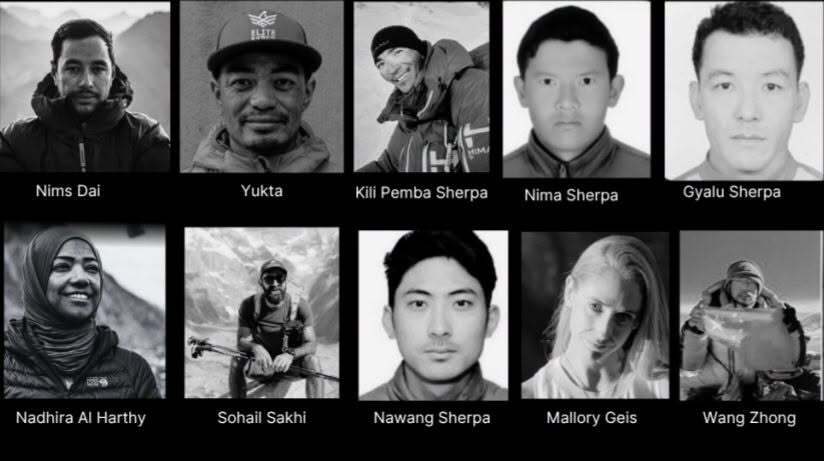
Nirmal “Nimsdai” Purja, Nepal. Purja led the expedition and was the best-known name on the team by far. He was only a teenager when he joined the British Gurkhas, and he later moved into the UK’s Special Boat Service, becoming one of the first Gurkha soldiers ever to serve there. Climbing came after the military, not before it, and he brought the same discipline to the mountains that he’d built in uniform. “I am quite lucky with my physiology, but I have also been trained by the best unit on earth,” he told the Kathmandu Post in 2019, talking about how his military background shaped what he could push his body through at altitude.
His early climbs already hinted at what was coming. In 2017, he climbed Everest and Lhotse in a record 10 hours and 15 minutes, a pace that stunned people who knew the route. That result is what pushed him toward the idea that would define his career: Project Possible.
The plan was simple to say and almost unthinkable to actually do. Climb all fourteen of the world’s 8,000 meter peaks in seven months. At the time, the fastest anyone had ever done it was just under eight years, a record held by South Korean climber Kim Chang-ho. Before that, Polish climber Jerzy Kukuczka needed almost eight years too. Purja wanted to cut that down by a factor of more than ten.
He started in April 2019 with Annapurna, then knocked out Dhaulagiri, Kanchenjunga, Everest, Lhotse, and Makalu, all in Nepal, inside of a single month. From there he moved to Pakistan for Nanga Parbat, Gasherbrum I, Gasherbrum II, Broad Peak, and K2. He called Kanchenjunga the hardest of the bunch, and said he handed his own oxygen bottles to other climbers in distress during that ascent. He finished the full set, all fourteen peaks, in six months and six days, smashing the previous record by more than seven years. The achievement became the Netflix documentary 14 Peaks: Nothing Is Impossible and turned him into one of the most recognizable names in mountaineering, known across Nepal simply as “Nims Dai.”
He didn’t stop there. In January 2021, he was part of the ten people, all Nepali team that made the first winter ascent of K2, closing out one of the last great unclimbed problems in high altitude mountaineering. In 2022, he set a run of speed records that read almost like a joke: the first person to climb Everest and Lhotse twice in a single season, the first triple header of 8,000 meter peaks without supplemental oxygen (Kanchenjunga, Everest, and Lhotse in 8 days, 23 hours, and 11 minutes), and the fastest Everest to Lhotse double without oxygen on record. In May 2026, just months before his death, he climbed from the summit of Everest straight to the summit of Lhotse without bottled oxygen once again.
By then he’d also become the first person to summit all fourteen 8,000 meter peaks twice without supplemental oxygen, a feat that put him in a category of his own even among the world’s best high-altitude climbers. Loughborough University recognized his career with an honorary degree in the winter of 2023, calling him a multi world record mountaineer. In total, he’d summited 8,000 meter peaks 57 times, 29 of them without oxygen, and reached that 57th summit only days before the Broad Peak avalanche, on Gasherbrum II. This climb was meant to be one more step toward finishing a second oxygen free round of all fourteen peaks, with only Cho Oyu left after it. He was 43. In his final social media post before the accident, he asked simply for a safe passage.
Pur Bahadur “Yukta” Gurung, Nepal. Yukta came from Luprak and started out as a porter before becoming one of Nepal’s most trusted high-altitude guides. He held IFMGA certification and was seen as one of Purja’s most senior and dependable climbers.
His own resume speaks for itself: 28 ascents of 8,000 meter peaks, including ten Everest summits and two on K2. After the 2025 earthquake hit his home region, he worked on rebuilding efforts there. Last fall, he was part of the team that supported Jim Morrison’s first ski descent of the Hornbein Couloir on Everest’s north face. His body was one of the first recovered, identified alongside Nadhira Al Harthy on July 31.
Kili Pemba “Kilu” Sherpa, Nepal. Kilu had climbed all fourteen 8,000 metre peaks, a rare milestone even among elite guides. In 2021, he helped open a new route on Manaslu. In 2018, he guided a Chinese climber with both legs amputated, using prosthetic limbs, all the way to the top of Everest, a climb that says a lot about his skill and patience as a guide.
Nima Sherpa, Nepal. Elite Exped confirmed his death on August 1, alongside Purja’s. More than one climber in the Nepali mountaineering community goes by this name, and it hasn’t been confirmed yet which specific climbing record belongs to him. Rather than guess or attach someone else’s achievements to his name, it’s more honest to say his story still needs to be told properly once his family or team can confirm the details.
Nawang Thindu Sherpa, Nepal. There isn’t much independently verified information about his climbing career yet, and specialist outlets covering the story have run into the same gap. What we do know is that he was part of the expedition team from Seven Summit Treks. Hopefully more of his story comes out in time.
Gyalu Sherpa, Nepal. Gyalu worked as a mountain guide with Seven Summit Treks. Like Nawang Thindu, his past climbing record hasn’t been independently confirmed, so it’s better to recognize him as a guide and team member for now rather than guess at numbers.
Sohail Sakhi, Pakistan. Sohail was from Hunza Valley and brought an unusual background into guiding. He held a master’s degree in mathematics from Quaid-e-Azam University in Islamabad, and worked as a photographer and drone pilot alongside his climbing career.
He’d summited Nanga Parbat, K2, Gasherbrum I, and Gasherbrum II, climbing Nanga Parbat and both Gasherbrums without bottled oxygen. He climbed Nanga Parbat again without oxygen in 2025. He was also known for speaking up for Pakistani mountain workers, arguing that local guides had been left behind as bigger international companies expanded through the Karakoram, and pushing for fairer pay and opportunities. He was 35. His body is the only one search crews haven’t found yet, and the search is complicated by unstable snow near the site.
Mallory Geis, United States. Mallory was from San Antonio, Texas, and came into this expedition from a completely different world than the guides around her. She ran a Pilates studio and worked as a travel photographer. She’d climbed Lobuche East and Mera Peak in Nepal before this, and Broad Peak was going to be her first 8,000 meter attempt.
She studied communication at the University of Southern California and sports management at San Diego State. In 2025, she wrote about falling in love with northern Pakistan during her travels there and encouraged others to visit. Her body was recovered on July 31. She was 39.
Nadhira Al Harthy, Oman. Nadhira was one of Oman’s most accomplished mountaineers. On May 23, 2019, she became the first Omani woman to summit Everest. She’d also climbed Ama Dablam and Manaslu, and was working toward all fourteen 8,000 metre peaks, with plans to attempt Gasherbrum I on this same trip.
Outside of climbing, she taught geology and held a senior role with the Oman Scouts and Guides Organization, plus environmental education work through the GLOBE Program. Her tracker recorded one of the worst falls in the group, over 1,600 meters, when the avalanche hit. Her body was recovered on July 31.
Wang Zhong, China. Wang was an experienced climber working through his own 8,000 meter project. On July 4, just weeks before the avalanche, he climbed Gasherbrum II alongside Purja himself, his eleventh 8,000 meter summit. Broad Peak would have been his thirteenth, leaving only Shishapangma between him and all fourteen. Nepal’s Ministry of Foreign Affairs confirmed his identity on July 31.
Ten different people, one mountain
What’s hard to sit with is how different these ten people were. A world record holder. Veteran Nepali guides who’d spent decades in the mountains. A Pakistani guide fighting for better treatment of local climbers. An Omani trailblazer. A Chinese climber closing in on a long-term goal. An American on her very first 8,000 meter attempts.
They came from five countries and were chasing five different kinds of dreams. Some had already done things most climbers never will. Others were just getting started. The mountain didn’t treat any of them differently.
Nepal’s Prime Minister Balendra Shah sent condolences to the families, saying their courage would keep inspiring people even after their journeys were cut short. Pakistani officials, including Alpine Club of Pakistan president Major General Irfan Arshad Khan, have stayed in close contact with government agencies to run the search, even as they’ve acknowledged how hard it is to operate at that altitude on unstable ground. Tributes for Purja in particular have come in from across the climbing world, given how much his 2019 record changed what people thought was possible at high altitude.
Elite Exped’s own statement after confirming the deaths captured the scale of the loss in a single line: the company said it was mourning not just Purja, but every life lost, including his trusted climbing partners and guides. Coverage from Nepal has framed his death in similar terms, describing a man who spent his career redrawing the limits of human endurance and reshaping what Nepali mountaineering looked like on the world stage. For a country whose guides have long done the hardest and most dangerous work on these mountains while getting a fraction of the recognition, Purja’s global fame was unusual, and so is the scale of grief now being expressed for him alongside the guides who worked beside him for years.
Recovery teams are still working through rough terrain and worsening weather to bring everyone home, including Sohail Sakhi. Search crews have said the ground near the accident site remains unstable, with loose snow continuing to shift days after the initial slide, which is part of why his recovery has taken longer than the others. By Sali Trekking.
Quick answers – Board Peak Avalanche
When did the Broad Peak avalanche happen?
It struck around 9 a.m. local time on Thursday, July 30, 2026, at about 6,579 meters between Camp II and Camp III on the West Ridge route.
Who led the expedition?
Nirmal “Nimsdai” Purja, the Nepali mountaineer and founder of Elite Exped, led the ten-person team.
Was anyone rescued?
No. All ten climbers on the mountain at the time of the avalanche died.
How many of the climbers have been recovered?
As of the most recent update, nine of the ten bodies have been located, and the search continues for Pakistani guide Sohail Sakhi.
What nationalities were the climbers?
Five were Nepali, one was Pakistani, and the remaining three clients were from the United States, Oman, and China.
Ten climbers went up Broad Peak with different histories, different goals, and different reasons for being there. Rest in peace, all of you.
