
The Broad Peak Avalanche 2026: What Actually Happened to Nimsdai Purja, and Where the Recovery Stands Now
Last updated: August 5, 2026
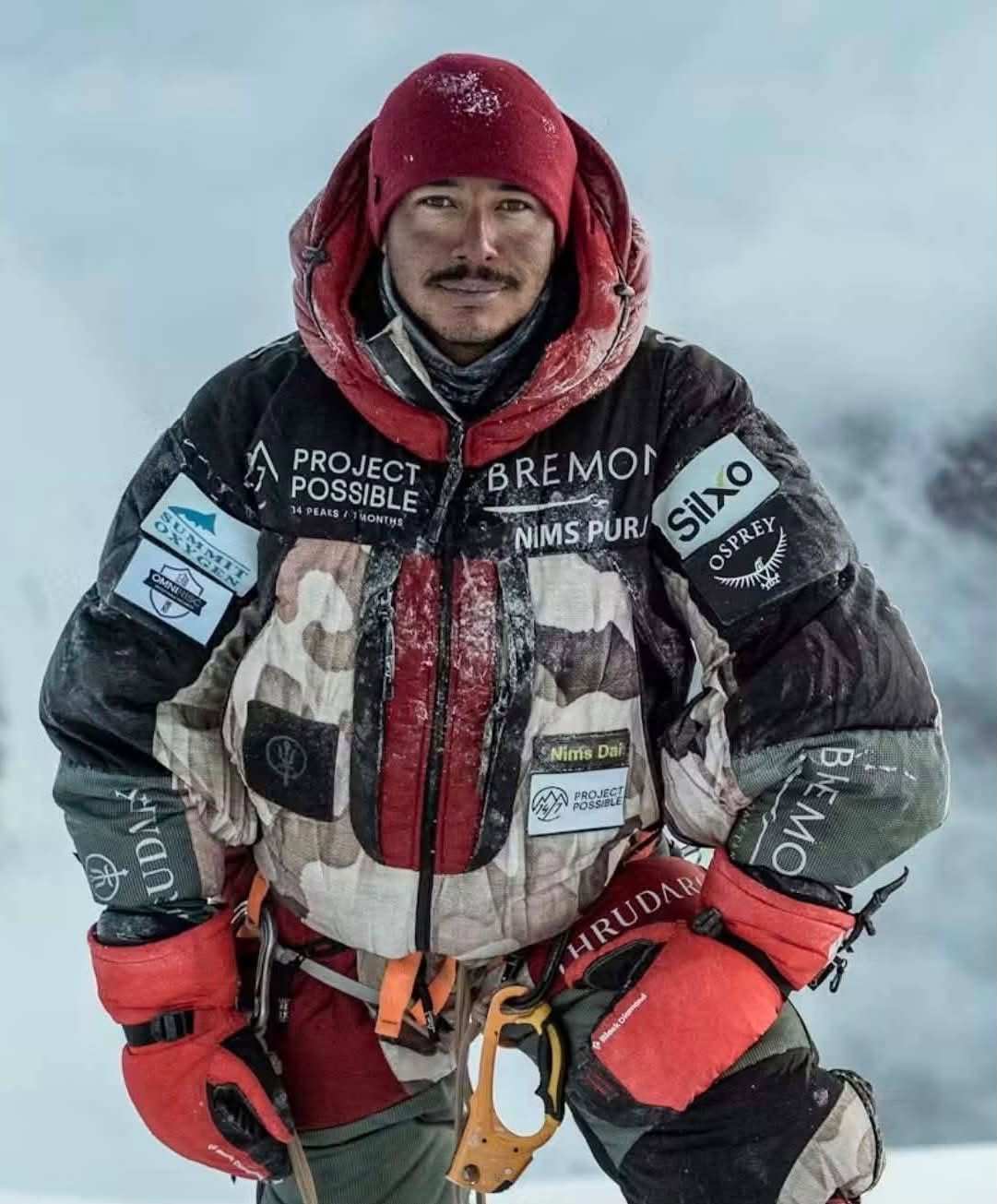
Nirmal “Nimsdai” Purja died alongside nine other climbers when an avalanche tore through their expedition on Broad Peak in Pakistan on July 30, 2026. A ground team reached his body on August 2 near 5,700 metres, but it hasn’t made it off the mountain yet. It’s stuck near 5,000 metres, along with Wang Zhong and Nima Sherpa, on ground too steep to carry a body down further by hand.
Five climbers have been recovered and moved toward Skardu: Nadhira Al Harthy, Pur Bahadur Gurung and Mallory Geis were airlifted there directly; Kili Pemba Sherpa and Gyalu Sherpa were brought down to flat ground and are awaiting a helicopter pickup.
Four remain on the mountain. Purja, Wang Zhong and Nima Sherpa are stranded near 5,000 metres, waiting on a long-line helicopter operation that keeps getting grounded by weather. Nawang Thindu Sherpa’s body has been spotted above 6,000 metres, in terrain rescuers have judged too dangerous to enter at all.
One climber, Sohail Sakhi, has never been found. Only his backpack and a broken tracker turned up in the debris.
What began as a search for survivors became, within about 36 hours, a recovery operation. It still is one, and it’s moving slower and more unevenly than the first headlines suggested. Here’s how the story actually unfolded, who was lost, and what’s left to be done.
How the avalanche happened
Broad Peak sits in Pakistan’s Karakoram range, an arm’s length from K2, and at 8,047 metres it’s the twelfth-highest mountain on earth. On the morning of Thursday, July 30, ten climbers were moving along the standard West Ridge route between Camp 2 and Camp 3, at roughly 6,580 metres, when the slope let go beneath them.
The group wasn’t one expedition in the usual sense. It was four teams converging on the same stretch of mountain at the same time. Purja was leading his own outfit, EliteExped, on what he’d framed as an attempt to become the first person to summit all fourteen of the world’s 8,000-metre peaks twice.
Climbers from Imagine Nepal and Seven Summit Treks were on the same route. And Pakistani guide Sohail Sakhi was there independently, taking American client Mallory Geis up her first eight-thousander.
GPS trackers carried by several of the climbers recorded what happened next in blunt, mechanical detail. Around 9 a.m. local time, multiple devices showed a sudden, fast drop. Geis’s tracker alone logged a fall of 543 metres in a matter of moments.
Purja’s last confirmed position before the slide was near 6,660 metres; thirty minutes later, pings placed him more than 600 metres lower. It’s the kind of data that tells you exactly when a disaster occurred without telling you anything about who survived it.
The bigger problem was time. The avalanche struck around midday, but word didn’t reach rescue authorities until that evening, a gap that cost the search its first daylight hours. By the time helicopters and ground teams could actually move, a full day had already slipped away.
Who died on Broad Peak Avalanche 2026
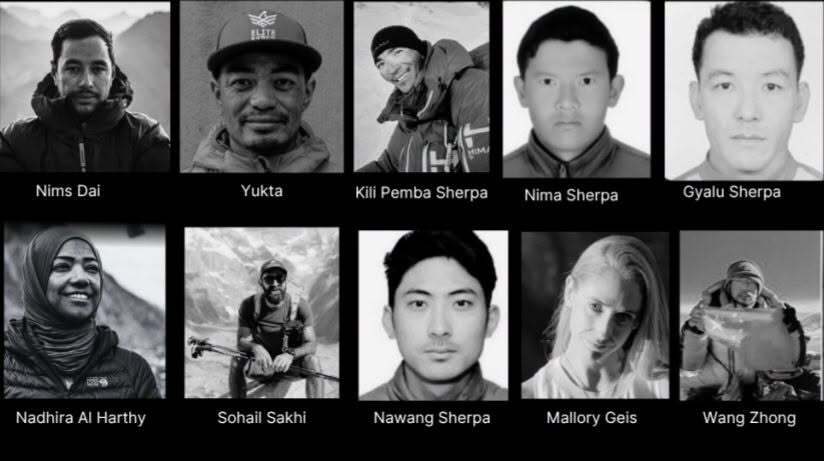
All ten climbers on that stretch of mountain lost their lives. Their deaths were confirmed in stages between July 31 and August 1, as bodies were located and identified:
- Nirmal “Nimsdai” Purja, 43, Nepal: former British Army Gurkha and special forces soldier, founder of EliteExped, famous for climbing all fourteen 8,000-metre peaks in six months and six days in 2019, a feat documented in Netflix’s 14 Peaks: Nothing Is Impossible
- Pur Bahadur “Yukta” Gurung, Nepal: a veteran guide who had summited Everest ten times, more than anyone else from his community
- Nima Sherpa, Nepal: had already climbed four 8,000-metre peaks earlier in 2026 before heading to Pakistan
- Nadhira Al Harthy, Oman: the first Omani woman to summit Everest, in 2019; had also climbed K2, Manaslu, Nanga Parbat and the Matterhorn
- Kili “Kilu” Pemba Sherpa, Nepal: one of Imagine Nepal’s most experienced climbers and part of the historic 2021 first winter ascent of K2
- Nawang Thindu Sherpa, 29, Nepal: had already summited Everest, Lhotse, Makalu, Kanchenjunga, Manaslu and Ama Dablam, and had taken part in a 2025 avalanche search on Annapurna and, just months before his own death, a recovery mission on Makalu II
- Gyalu Sherpa, Nepal: a Seven Summit Treks guide from Okhaldhunga who’d worked commercially since 2015
- Sohail Sakhi, Pakistan: a no-supplemental-oxygen advocate who had summited every 8,000-metre peak in his home country, and who reportedly intended this trip to be his last before stepping back from expedition work
- Mallory Geis, 39, United States: from San Antonio, Texas, on her first attempt at an 8,000-metre mountain
- Wang Zhong, 52, China: had summited eleven 8,000-metre peaks before Broad Peak, including Nanga Parbat and Gasherbrum II earlier the same month, and was closing in on completing all fourteen; Broad Peak would have been his thirteenth
Elite Exped confirmed Purja’s death publicly on August 1, calling it a moment of “profound sadness and immense heartbreak.” Nepal’s prime minister, Balendra Shah, offered condolences on behalf of the country, and the Alpine Club of Pakistan coordinated updates as the operation continued.
Every commercial expedition still active elsewhere in the Karakoram this season was called off in the aftermath.
The recovery, day by day
Friday, July 31. Search teams located and, in difficult weather, managed to bring down three bodies: Nadhira Al Harthy, Pur Bahadur Gurung and Mallory Geis. Al Harthy was flown to Skardu by helicopter; arrangements were made to move Gurung the same way. Poor weather later grounded the aircraft and forced a pause in operations overnight.
Saturday, August 1. Search and rescue resumed with more resources: Pakistan Army Aviation helicopters, drones, and a ground team led by veteran Pakistani climber Sirbaz Khan that flew to base camp and pushed on foot toward Camp 2. Drone footage that day picked up signs of the missing higher on the mountain.
By evening, Mingma Gyalje Sherpa, known throughout the climbing world as Mingma G and the person effectively directing the recovery, said nine of the ten climbers had been located, with Sakhi still unaccounted for. He also asked the public, pointedly, to stop speculating about tracker signals and unconfirmed reports while families were still waiting for real answers.
Sunday, August 2. A joint Nepali-Pakistani team of ten climbers reached base camp; eight pushed up to Camp 1, and five of them, with Mingma G at the front, continued to the avalanche site itself, near 5,700 metres.
They brought down four bodies that day: Nirmal Purja, Kili Pemba Sherpa, Nima Sherpa and Wang Zhong. The team then tried to lower all four further, toward flat ground on the Concordia side of the mountain, where a helicopter could eventually reach them. Only one made it. Kili Pemba Sherpa’s body was successfully brought down to that flat area. Purja, Wang Zhong and Nima Sherpa got stuck on a difficult slope around 5,000 metres, terrain that can’t be down-climbed safely with a body on a rope. Rescuers said a long-line helicopter operation was the only remaining option for those three.
Gyalu Sherpa’s body was recovered separately, from more accessible ground, and moved toward the same pickup point as Kili Pemba Sherpa.
Monday, August 3, into Tuesday, August 4. An army helicopter was due to fly from Skardu to collect Kili Pemba Sherpa and Gyalu Sherpa, and to assess whether a long-line attempt was possible for the three still stuck at 5,000 metres. Weather scrubbed the flight. By Tuesday, Mingma G told reporters conditions were still “completely adverse for heli operations,” and that his team was the only one left on the mountain, everyone else had already gone home. He said he’d try to resume the ground effort where possible.
Nawang Thindu Sherpa, meanwhile, has stayed in the same place since he was first spotted: above 6,000 metres, in ground the rescue team judged too dangerous to enter after a second avalanche came down nearby. No attempt on his body has been made.
So as it stands: five bodies are confirmed recovered and moving, one way or another, toward Skardu. Four are still on the mountain, three of them found and moved but stuck partway down, one found but never approached. Sohail Sakhi is still missing outright. Getting the remaining four off the mountain, or deciding some of it isn’t possible, is the last chapter of this story.
Why some bodies come down faster than others
It’s worth explaining why this took the shape it did, because the terrain, not the weather alone, is really what dictated the pace.
Broad Peak’s West Ridge route funnels climbers through a narrow band between Camp 2 and Camp 3 that’s exposed to exactly the kind of slab avalanche that hit on July 30. Bodies that ended up lower on that slope, closer to accessible ground, were reachable relatively quickly.
Bodies that landed higher, on steeper and more unstable terrain, required climbers to physically go back into avalanche-prone ground to retrieve them, the same risk that killed the original ten, taken on again deliberately by the recovery team. And even once a body is reached, getting it the rest of the way down isn’t guaranteed. Purja, Wang Zhong and Nima Sherpa were all found and moved once, from 5,700 metres, but stalled a second time on a slope near 5,000 metres that the team couldn’t safely down-climb with a body in tow.
Pakistan’s Karakoram also doesn’t have the same long-line helicopter recovery infrastructure that neighbouring Nepal has built up around Everest and other 8,000ers. Long-line work, where a helicopter hovers and lifts a load on a cable without ever landing, needs specific aircraft, trained pilots and a weather window calm enough to hold a stable hover at extreme altitude.
When that combination isn’t available, as it largely wasn’t in the days after the avalanche, the alternative is a team of climbers going up on foot, roping the body, and lowering it down pitch by pitch. That’s how Kili Pemba Sherpa’s body reached flat ground on August 2. It’s also exactly where the method ran out for Purja, Wang Zhong and Nima Sherpa, whose bodies now need the long-line option that weather has so far refused to allow.
Nawang Thindu Sherpa’s case shows the limit of that approach. His body has been seen. Its location is known. But the same slope that killed him has already slid again once since the original avalanche, and no rescue leader is going to send a team back into ground that’s demonstrated it can move twice. For now, that recovery is on hold indefinitely, not abandoned but not scheduled either.
Mingma G’s role, and what it means that he’s the one leading this
Mingma Gyalje Sherpa has built his reputation over more than a decade of high-altitude guiding through his company, Imagine Nepal, and through winter ascents that few others have attempted. He wasn’t originally part of this particular Broad Peak season in the way Purja was.
But once the avalanche hit, he became the figure most consistently associated with directing the recovery, alongside Pakistani climbers Sirbaz Khan and Sherzad Karim and Nepali climber Mingma David Sherpa, Purja’s own EliteExped business partner.
There’s a personal layer to this that hasn’t gone unnoticed in Nepal’s climbing community. Mingma G and Purja were both part of the ten-person all-Nepali team that completed the first winter ascent of K2 in January 2021, one of the defining achievements in the sport’s recent history, and a moment that made both men household names at home.
Kili Pemba Sherpa, one of the climbers who died on Broad Peak, was on that same K2 team. Five years after standing on that summit together, Mingma G found himself leading the team that carried his former rope-mate’s body down a different mountain.
He’s also been the person managing public expectations through the whole operation, including his blunt request in the first days for people to stop guessing at what tracker data meant while families waited on confirmed news. That’s not a small thing in an era where every GPS ping gets picked apart on social media within minutes.
Why Broad Peak, specifically, is unforgiving
Broad Peak gets described sometimes as the “easier” neighbour of K2, and technically, on a good day, that’s fair. The standard route doesn’t demand the same climbing skill as K2’s most direct lines. But easier by comparison to one of the hardest mountains on the planet still leaves plenty of room for disaster.
The mountain sits at nearly 8,050 metres, well into the altitude range where the body is actively dying rather than adapting, where judgment slows, and where a slope that looked stable on the way up can fail on the way down.
Conditions in the two weeks before this avalanche had already been flagged as unsettled. Climbers who left the area earlier in July reported a major windstorm on the 18th, with high winds and elevated humidity persisting through the rest of the month, the kind of pattern that loads fresh snow onto existing slopes and sets up exactly the failure that occurred on July 30.
None of the ten who died were inexperienced in any conventional sense. Several were career high-altitude guides with dozens of 8,000-metre ascents between them. Purja himself had climbed more of the world’s highest peaks, faster, than almost anyone in history. That’s the part of this story that keeps resurfacing in tributes and interviews since: an avalanche doesn’t check résumés.
What a mountain recovery actually involves
It’s easy, looking at a headline that says “body recovered,” to picture something closer to a rescue, a team finds someone, and that’s the hard part done. On an 8,000-metre peak, finding is closer to the beginning.
Once a body is located, it has to be secured to a rope or litter without exposing more people to the same slope that likely caused the death in the first place. It then has to be moved, often lowered pitch by pitch through the exact terrain that makes the mountain dangerous: steep, sometimes icy, sometimes sitting on snow that hasn’t finished settling since the last slide.
Only once it reaches a point like Camp 1, where the ground flattens out and helicopters can realistically operate, does the operation shift from mountaineering to logistics: getting a helicopter in the air, finding a weather window, and flying the remains down to Skardu for identification and eventual return to their families.
Every one of those stages puts the recovery team in the same environment that killed the person they’re retrieving. That’s why this kind of work is done almost exclusively by climbers with serious high-altitude credentials. The IFMGA/UIAGM certification that guides like Mingma G hold is specifically built around managing exactly this kind of risk assessment at altitude.
Even with five bodies moving toward Skardu, the operation for the other four hasn’t been rushed, and Mingma G has said as much publicly, framing safety for the living team as the priority over speed for the dead.
What happens next
For Purja, Wang Zhong and Nima Sherpa, the holdup is almost entirely weather. Their bodies are down from the original avalanche site and sitting at a lower, if still difficult, point on the mountain. What’s missing is a calm enough window for a long-line helicopter to come in and lift them off without landing. Officials have said that’s the only realistic option left for that stretch of slope.
For Nawang Thindu Sherpa, the situation is more open-ended. His body hasn’t moved since it was first spotted, and no attempt has been made on it. If the slope that slid a second time settles and holds through a proper freeze-thaw cycle, a team may go back up. If it doesn’t, his body may remain on the mountain far longer, which is not unheard of at this altitude. Broad Peak, like every 8,000-metre peak, already holds the remains of climbers from earlier decades who were never brought down.
For Sohail Sakhi, the outlook is harder still, because there’s no confirmed location to work from, only a backpack and a broken tracker recovered from the debris field below where the slide released. Search efforts for him have effectively become a debris-field search rather than a targeted recovery, and there’s no clear timeline for when, or whether, that changes.
For the five climbers already sent toward Skardu, the process now shifts to identification, formal confirmation, and the long, quieter work of returning remains to families in Nepal, Pakistan, the United States and Oman.
A loss that reaches beyond climbing
Purja’s death has landed hardest publicly, given how far his name traveled outside mountaineering circles after his 2019 record and the Netflix documentary that followed it. But inside Nepal’s climbing community, the weight of this avalanche isn’t really about one name.
Five of the ten who died were Nepali high-altitude workers, the guides who make virtually every commercial Himalayan and Karakoram expedition possible, and who are disproportionately the ones exposed to exactly this kind of risk, year after year, on behalf of paying clients from around the world.
Nawang Thindu Sherpa, at 29, had already built a résumé most climbers twice his age would envy, and had spent part of the previous year on recovery missions himself, including one earlier in 2026 that brought a Czech climber’s body down from Makalu II. Gyalu Sherpa had spent nearly a decade guiding professionally after starting out in 2015. Kili Pemba Sherpa carried the distinction of a winter K2 ascent that few people on earth can claim.
These are not footnotes to Purja’s story. They’re the backbone of an industry that keeps sending people back up mountains that have already proven they can kill.
Frequently asked questions
What happened to Nirmal Purja on Broad Peak? He died in an avalanche that struck a ten-person climbing group between Camp 2 and Camp 3 on Broad Peak, Pakistan, on July 30, 2026. His death was confirmed publicly by his company, EliteExped, on August 1.
Has Nimsdai Purja’s body been recovered? Partly. A ground team led by Mingma G reached his body near 5,700 metres on August 2 and moved it, but it’s now stuck near 5,000 metres, on ground too steep to lower it further by hand. Officials say a long-line helicopter is the only remaining option, and weather has repeatedly grounded that flight. He has not yet reached Skardu.
How many bodies have been recovered from Broad Peak? Five have been recovered and are moving toward Skardu: Nadhira Al Harthy, Pur Bahadur Gurung and Mallory Geis were airlifted there directly, and Kili Pemba Sherpa and Gyalu Sherpa were brought down to flat ground and are awaiting helicopter pickup.
Who is still on the mountain, and who is still missing? Four climbers remain on Broad Peak. Purja, Wang Zhong and Nima Sherpa are stuck near 5,000 metres awaiting a long-line helicopter lift. Nawang Thindu Sherpa’s body has been located above 6,000 metres but sits in terrain the rescue team has judged too dangerous to enter. Sohail Sakhi is separately still missing outright, only his backpack and a damaged tracker have turned up.
How high is Broad Peak? 8,047 metres (26,414 feet), making it the world’s twelfth-highest mountain.
Where is Broad Peak located? In Pakistan’s Karakoram range, in the Gilgit-Baltistan region, close to K2.
Who is leading the recovery operation? Nepali climber Mingma Gyalje Sherpa (Mingma G) has directed most of the recovery effort on the ground, working alongside Pakistani climbers Sirbaz Khan and Sherzad Karim and Nepali climber Mingma David Sherpa, with support from Pakistan Army Aviation helicopters and the Alpine Club of Pakistan.
Why couldn’t helicopters simply retrieve the bodies? The terrain near the avalanche site, around 5,700 metres, is too steep for a helicopter to land, and Pakistan doesn’t have the same long-line helicopter recovery capacity that’s used on Everest in neighbouring Nepal. Poor weather also grounded flights for several critical days, forcing rescuers to rely on climbers going up on foot.
Is this still a rescue operation? No. All ten climbers were confirmed dead by August 1. What’s ongoing now is strictly a recovery effort for the four climbers still on the mountain.
Five families have their answer now, even if the return of their loved ones is still working its way through the logistics of a very remote part of the world. Four families are still waiting on the mountain itself to decide what’s possible, and one is waiting on a debris field that hasn’t given up an answer yet. Whatever happens with the four still up there, the climbers who went back for their colleagues have already done the harder part, walking, deliberately, into ground that had already shown exactly what it was capable of.
