
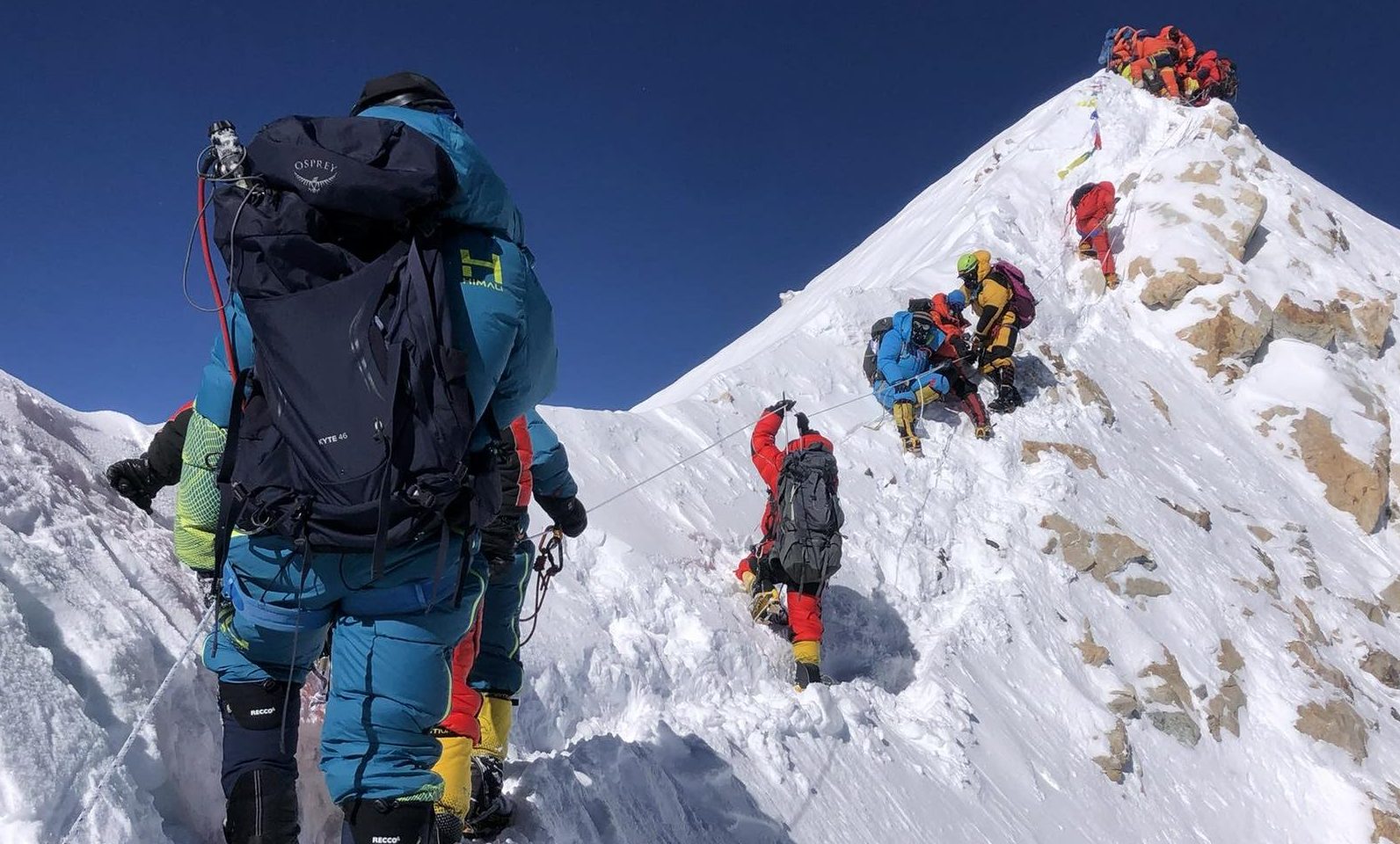
Makalu Climbing Guide Abandons Russian Climber
A Sali Trekking safety and industry news report.
Quick Answer: Makalu Climber Left Behind
Russian climber Konstantin Smirnov alleges his guide, Bhajuram Gurung, abandoned him at approximately 7,900 meters during the descent from Makalu’s summit on May 9, 2026. Smirnov reports surviving roughly 33 hours exposed on the mountain, suffering fourth-degree frostbite, and losing all fingers on his left hand. He has since filed a negligence complaint with Nepal’s Consumer Court in Kathmandu and a police report in Sankhuwasabha district, and his legal team has raised the possibility of an attempted murder allegation against the guide.
Why This Makalu Incident Matters for Climbers and Trekkers
Makalu, at 8,485 meters, the fifth highest mountain on earth, has long been considered a serious but achievable objective for experienced climbers. The events of May 2026, in which a client alleges he was left behind by his own guide during a worsening storm, have raised fresh questions about guide accountability, rescue protocols, and how climbers should vet a trekking or expedition company before booking a high-altitude trip.
This report walks through what Smirnov says happened, the legal action now underway in Nepal, and what climbers can do to reduce their own risk when choosing a guide for an 8000m expedition.
What Happened on Makalu: Guide Abandons Climber at 7,900 Meters
Makalu Summit Push, May 9, 2026: Timeline of the Ascent
On May 9, 2026, roughly 8 clients and 11 guides reached the summit of Makalu. The first climber to top out was Russian client Daria Borisova, who summited with her two Sherpas just after 5 a.m. under clear morning skies.
Konstantin Smirnov and his guide, Bhajuram Gurung, assigned to him by the outfitting company Makalu Adventure, were among the last to summit, reaching the top at around 10:45 a.m., climbing close behind an American party that included Shelley Johannesen and Dave Ashley.
Descent From Makalu Summit Turns Dangerous in Snowfall
By the time Smirnov and Gurung began their descent, clear skies had given way to thick cloud cover and steady snowfall. The two stayed on the summit for around 45 minutes to an hour before heading down, and the falling snow soon began burying the fixed lines, slowing their progress considerably.
Konstantin Smirnov Left Alone at 7,900m: What He Reported
Smirnov told journalists that between roughly 6:30 and 7 p.m., Gurung left him at an altitude of approximately 7,900 meters and continued down alone to Camp III at 7,500 meters, arriving there by about 9 p.m. Smirnov says he was not informed the descent would happen this way and that Gurung did not alert base camp or other climbers that a client remained higher on the mountain.
| Time (Nepal Standard Time) | Event |
| 10:45 a.m., May 9 | Smirnov and guide Bhajuram Gurung reach the Makalu summit, among the last of the day’s climbers. |
| 6:30 to 7:00 p.m., May 9 | Smirnov alleges Gurung left him alone at approximately 7,900 meters. |
| 9:00 p.m., May 9 | Gurung reportedly arrives at Camp III (7,500 meters) alone. |
| 9:30 p.m., May 9 | Smirnov stops to rest at 7,720 meters after removing a mitten and reports losing consciousness. |
| 10:00 a.m., May 10 | Smirnov wakes and radios for help and is told rescuers are on the way. |
| Early afternoon, May 10 | After waiting roughly four hours with no rescuers arriving, Smirnov begins descending alone. |
| 5:40 p.m., May 10 | Smirnov reaches Camp III on his own after roughly 33 hours since the summit. |
Konstantin Smirnov’s 33-Hour Survival Ordeal on Makalu
Overnight Exposure and High-Altitude Coma at 7,720m
Smirnov’s account is backed by a continuous 33-hour track recorded on his Coros watch, capturing his altitude, GPS position, and heart rate throughout the ordeal. He has said that snowfall slowed his progress that evening and that he stopped to rest at around 7,720 meters, removing a mitten to carry out a task before losing consciousness in what he describes as a high-altitude coma or exhausted sleep.
Frostbite Injury: How Konstantin Smirnov Lost His Fingers
With his mitten off during prolonged exposure at extreme altitude, Smirnov developed fourth-degree frostbite, the most severe classification of cold injury, affecting tissue down to the muscle, tendon, and bone. He has since lost all fingers on his left hand.
Self-Rescue to Camp III: Smirnov’s Solo Descent on Makalu
Smirnov says that after waking up around 10 a.m. on May 10, he radioed the expedition operator and was told Sherpas with oxygen were being sent to help him. After waiting about four hours with no sign of rescuers and unsure he would survive a second night on the mountain, he decided to descend on his own.
He reached Camp III at around 5:40 p.m., roughly 33 hours after summiting. He has said that Gurung remained in a warm, oxygen-equipped tent at Camp III throughout the day and, according to Smirnov, declined to help retrieve him or provide him with oxygen or water once he arrived.
Makalu Guide Negligence Lawsuit: Legal Action Explained
Consumer Court and Police Complaint Filed in Kathmandu and Sankhuwasabha
Following his rescue and return to Kathmandu, Smirnov filed a formal complaint with Nepal’s Consumer Court and a separate report with the District Police Office in Sankhuwasabha, the district where Makalu is located. Both filings name Kathmandu-based outfitter Makalu Adventure and guide Bhajuram Gurung.
What the Negligence Allegations Against the Guide Include
According to a legal representative working with Smirnov, the core of the complaint is not only that Gurung left his client behind but also that he made no apparent effort to seek help or return for Smirnov afterward and did not notify the outfitting company himself.
Smirnov’s team has said this pattern of inaction, combined with the guide’s decision to stay in a warm tent rather than assist once Smirnov reached camp, forms the basis for a possible attempted murder allegation. It is important to note that this remains an allegation working through Nepal’s legal system and has not been decided by a court.
Makalu Adventure’s Response to the Abandonment Claims
Mohan Lamsal, managing director of Makalu Adventure, has defended Gurung by pointing to his local mountaineering certifications and prior guiding experience. The company’s detailed response to the specific negligence claims is expected to unfold as part of the ongoing Consumer Court and police proceedings.
Is Makalu Safe to Climb? Understanding the Risks of 8000m Peaks
Pattern of Guide Separation Incidents on Makalu
The Smirnov case is not the only recent instance of a guide and client becoming separated on Makalu. During a January 2026 winter ascent, guide Phurba Ongel Sherpa died in a fall below Camp IV, and client Abolfazl Gozali reportedly continued descending alone after the accident and has not been found since.
Taken together, these incidents point to a recurring risk on Makalu when weather turns and a party becomes split during descent.
Why Whiteout Descents Are the Highest Risk Phase of an 8000m Climb
On any 8000m peak, the descent is typically more dangerous than the summit push itself. Climbers are more fatigued, oxygen and energy reserves are lower, and a change in weather can bury fixed lines and reduce visibility to near zero within a few hours, exactly the conditions Smirnov and Gurung faced on their way down from the summit.
How to Choose a Safe, Licensed Climbing Guide in Nepal
Nepal’s Mandatory Licensed Guide Rule Since April 2023
Since April 2023, Nepal has required licensed guides for trekking and climbing expeditions. Climbers should ask their outfitting company directly for a guide’s license number and certification history before booking a high-altitude trip, and confirm this independently rather than relying on the company’s word alone.
Questions to Ask Your Trekking Company Before Booking a High-Altitude Climb
Before booking an 8000m expedition, climbers should ask what the guide-to-client ratio will be on summit day, what the company’s emergency rescue protocol looks like, how quickly a rescue team could reach a stranded climber above Camp III, and how the guide will stay in contact with base camp during the descent.
Emergency Communication and Rescue Protocols to Verify in Advance
Climbers should also confirm what satellite or radio communication equipment will be carried on summit day, who at base camp is responsible for tracking the party’s progress, and what the company’s written protocol is if a guide and client become separated.
Sali Trekking’s Guide Safety and Client Communication Standards
Saligram Aryal’s Years of High-Altitude Guiding Experience
Sali Trekking is founded and led by Saligram Aryal, who brings years of guiding experience across Nepal’s major trekking and expedition routes. That experience directly informs how the company structures guide oversight on technical and high-altitude trips.
How Sali Trekking Structures Guide to Client Ratios on Technical Climbs
Sali Trekking maintains clear guide-to-client ratios and defined communication checkpoints with base camp during summit pushes and descents so that a client’s location and condition are known throughout the climb rather than only at scheduled camps.
Frequently Asked Questions About the Makalu Climber Left Behind
What happened to Konstantin Smirnov on Makalu?
Konstantin Smirnov, a Russian climber, alleges that his guide Bhajuram Gurung left him alone at around 7,900 meters during the descent from Makalu’s summit on May 9, 2026. Smirnov says he spent roughly 33 hours exposed on the mountain before reaching Camp III on his own.
Who is Bhajuram Gurung?
Bhajuram Gurung is the Nepali mountain guide who was assigned to Konstantin Smirnov by the outfitting company Makalu Adventure for the May 2026 Makalu expedition.
Who is Konstantin Smirnov?
Konstantin Smirnov is an experienced Russian mountaineer who has climbed other major peaks, including Mount Elbrus, before his Makalu expedition in 2026.
When did the Makalu abandonment incident happen?
The incident occurred on May 9 and May 10, 2026, during the descent from Makalu’s summit.
At what altitude was Smirnov allegedly left behind?
Smirnov reports he was left at approximately 7,900 meters, while his guide continued down to Camp III at 7,500 meters.
What injuries did Konstantin Smirnov suffer?
Smirnov suffered fourth-degree frostbite, the most severe classification, and lost all fingers on his left hand as a result.
How did Smirnov survive the night on Makalu?
Smirnov’s Coros watch recorded a continuous 33-hour track of his location, altitude, and heart rate. He reported falling into a high-altitude coma or exhausted sleep after removing a mitten, which contributed to the frostbite, before waking and eventually descending self-reliantly to Camp III.
What legal action has Smirnov taken?
Smirnov has filed a complaint with Nepal’s Consumer Court in Kathmandu and a separate report with the District Police Office in Sankhuwasabha, alleging negligence against his guide and the outfitting company.
Is Bhajuram Gurung facing an attempted murder charge?
Smirnov’s legal representatives have raised the possibility of an attempted murder allegation, arguing the guide made no attempt to seek help or return for Smirnov after leaving him. As of this writing, this remains an allegation under review rather than a court finding.
What has Makalu Adventure said in response?
Makalu Adventure’s managing director has defended the guide by pointing to his local mountaineering certifications and experience. The company’s full response to the specific negligence allegations is part of the ongoing legal process.
Was anyone else affected during the same Makalu descent?
Yes. American climber Shelley Johannesen died in a separate accident below Camp III during the same general period, in a party that had been climbing near Smirnov’s group.
Has this kind of incident happened on Makalu before?
Yes. In January 2026, during a winter ascent of Makalu, guide Phurba Ongel Sherpa died in a fall, and client Abolfazl Gozali went missing after reportedly continuing to descend alone. Neither Gozali nor his body has been recovered.
What is fourth-degree frostbite?
Fourth-degree frostbite is the most severe stage of cold injury, affecting muscle, tendon, and bone in addition to skin, and it frequently requires amputation of the affected tissue.
Why do descents become more dangerous than the summit push on 8000 m peaks?
Descents on 8000m peaks are often more dangerous than the ascent because climbers are more fatigued, oxygen and energy reserves are depleted, and weather can deteriorate quickly, burying fixed lines and slowing progress exactly when speed matters most.
Is Makalu safe to climb in 2026?
Makalu remains climbable with proper preparation, but it is a serious 8000m peak with a lower guiding and rescue infrastructure than more commercialized mountains like Everest. Choosing a licensed, well-reviewed guide company is essential.
Are mountain guides in Nepal required to be licensed?
Yes. Nepal has required licensed guides for trekking and climbing expeditions since April 2023, and climbers should verify a guide’s license and credentials directly with their outfitting company before booking.
What should a climber do if their guide leaves them during a descent?
If safely possible, a climber should stay in radio or satellite contact with base camp, conserve energy and body heat, and try to follow fixed lines or GPS tracks toward the nearest camp rather than moving off route in poor visibility.
What questions should climbers ask a trekking company before booking a high-altitude climb?
Climbers should ask about the guide’s licensing and experience on the specific peak, the company’s emergency rescue protocol, guide-to-client ratios, and how the company communicates with base camp during a summit push.
How does Sali Trekking approach guide safety on technical climbs?
Sali Trekking is founded by Saligram Aryal, who has years of guiding experience in Nepal, and the company structures its guide-to-client ratios and communication protocols to reduce the risk of separation during high-altitude descents.
Where can climbers verify a guide’s credentials in Nepal?
Climbers can request a guide’s license number and certification history directly from their trekking company and cross-check it with Nepal’s Ministry of Culture, Tourism, and Civil Aviation or the Nepal Mountaineering Association.
What happened to Shelley Johannesen on Makalu?
Shelley Johannesen, an American climber, died in an avalanche-related accident below Camp III while descending from the Makalu summit during the same period as the Smirnov incident.
Is Konstantin Smirnov’s case still ongoing?
Yes. As of this writing, the case remains in the Nepali legal system, with filings before the Consumer Court in Kathmandu and police in Sankhuwasabha district.
About the Author
Saligram Aryal
Saligram Aryal is the founder of Sali Trekking, a Kathmandu-based trekking and climbing company, and has years of guiding experience across Nepal’s major trekking and expedition routes. He writes on trekking safety, route planning, and industry standards for climbers and trekkers visiting Nepal.
