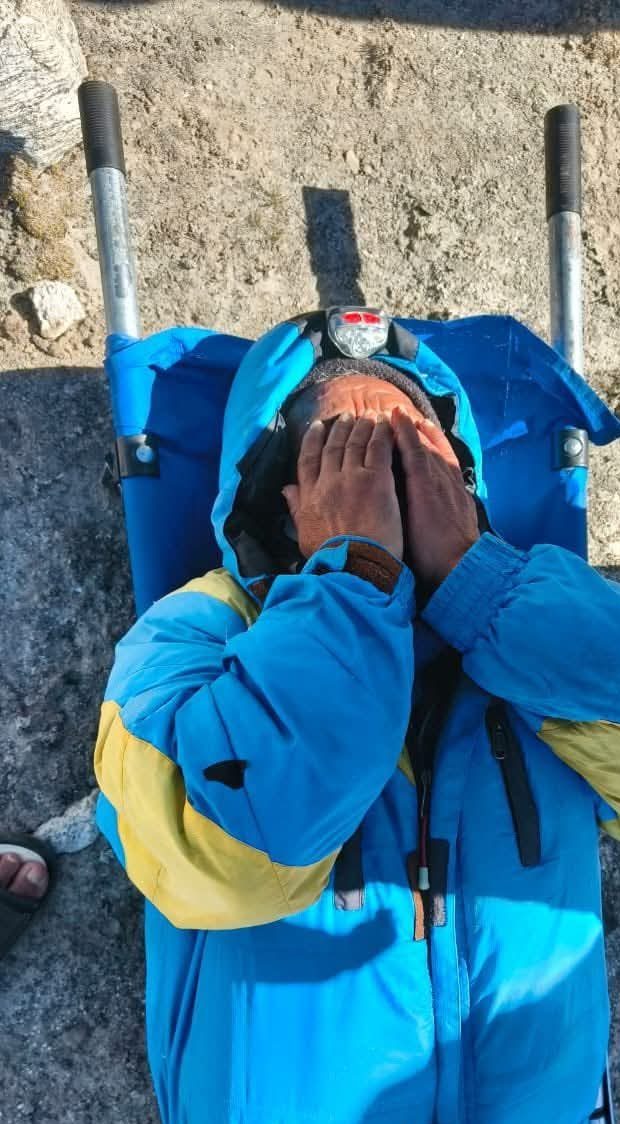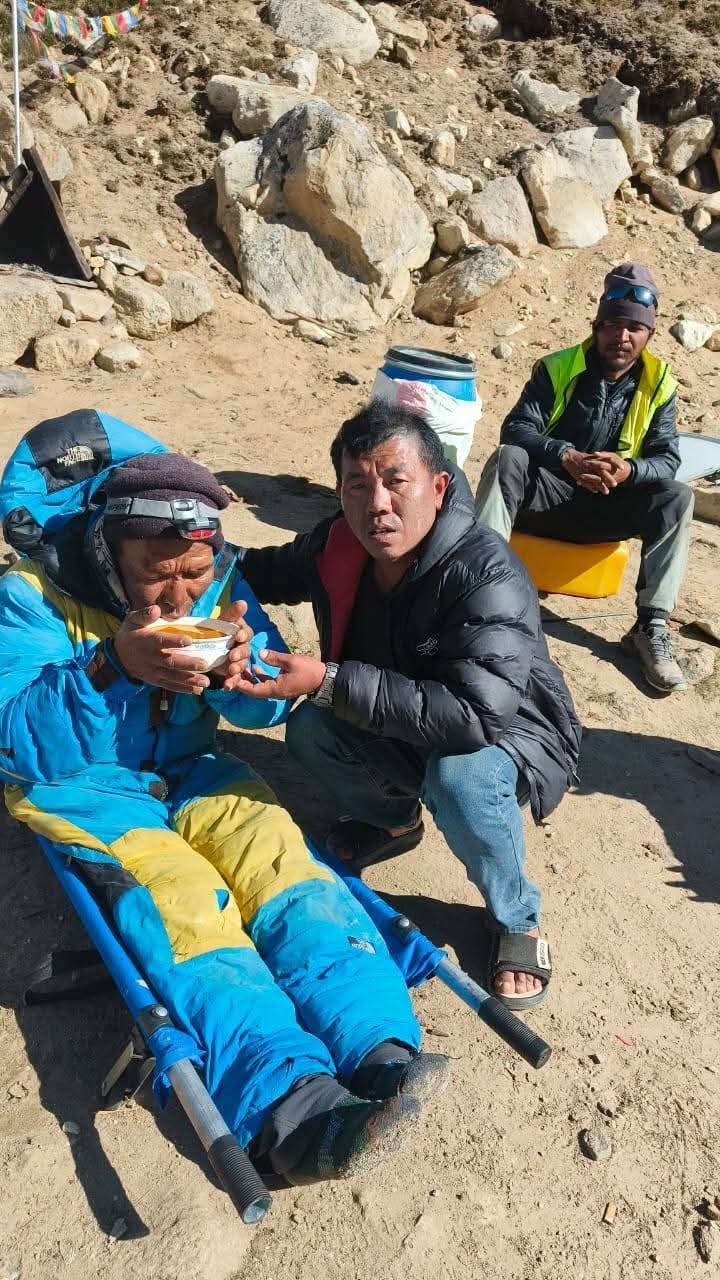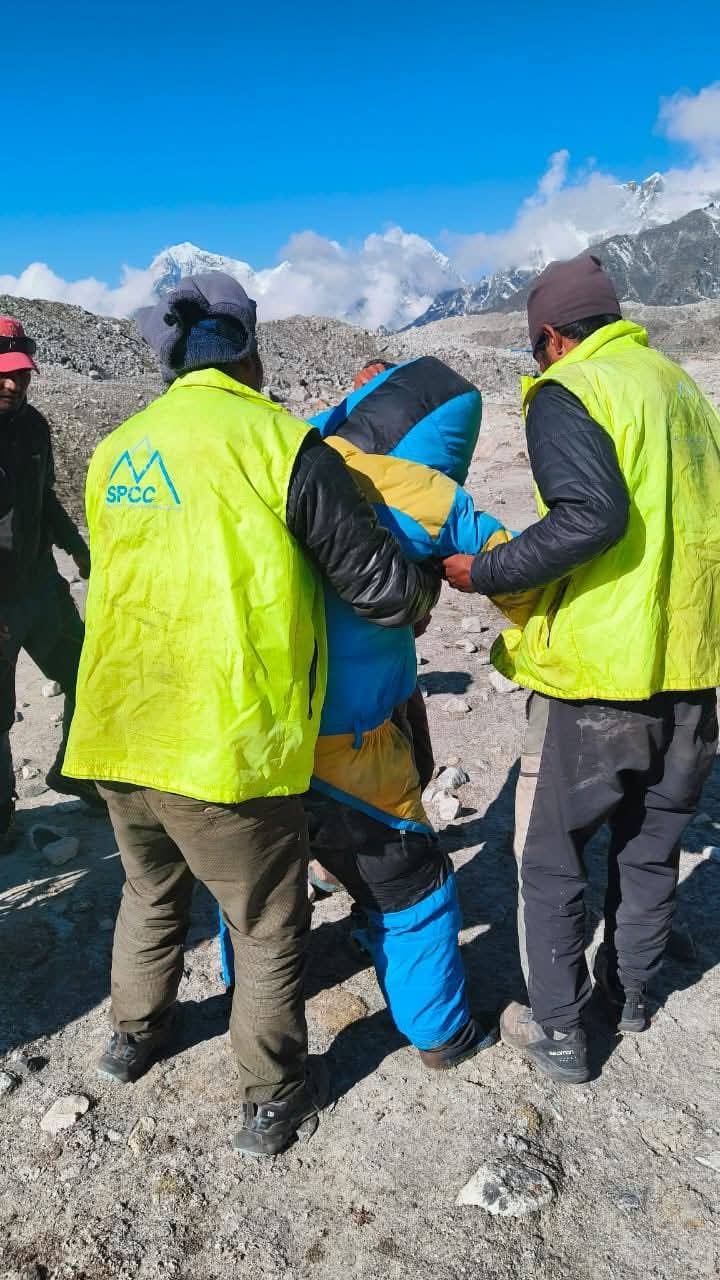
In one of the most extraordinary survival stories in the history of high-altitude mountaineering, a Nepali Sherpa guide (Cook) who vanished on Mount Everest for six days was found alive on June 4, 2026 crawling down one of the most dangerous glaciers on Earth toward base camp.
Hillary Dawa Sherpa, 52, disappeared on May 29 near Camp IV during the final day of the 2026 spring climbing season on Everest. For six days, he was alone, above the “Death Zone,” with no fixed ropes, no rescue, and a family at home beginning funeral rites. When workers from the Sagarmatha Pollution Control Committee found him near Crampon Point in the Khumbu Icefall that Thursday morning, they spotted a figure in heavy-duty winter clothing, crawling forward. It was Dawa. He was conscious. He was alive.
The mountaineering world has called it nothing short of a miracle. We think that may be an understatement.
Known locally as “Hillary Dawa,” he was assigned to the 2026 Everest expedition in a support role which was specifically as a cook stationed at Camp II. But when the expedition fell short of qualified high-altitude personnel, Dawa was brought into the summit rotation as a guide for a Polish client. It was a decision that would change, and nearly end, his life.
According to fellow climber Chris Thrall, Dawa and the Polish client were last seen together at Camp IV on the night of May 29, after Thrall himself reached the summit at around 5 PM. The group spent the night together. The next morning, the Polish climber descended ahead. Dawa fell behind.
With oxygen supplies critically low and the season’s fixed ropes and ladders already being dismantled by the SPCC, Dawa was effectively cut off from any managed descent. He was alone at extreme altitude, facing one of the most hostile environments on the planet.
This is nothing short of a miracle.
The full account of Dawa’s six-day ordeal has been pieced together from expedition coordinators, rescue workers, and survivor accounts. It is a story of extraordinary physical and mental endurance.
At some point after becoming separated from his client, Dawa fell into a crevasse near Camp I at roughly 19,500 feet. He was trapped for approximately two days before managing to free himself. In an environment where the body burns through its reserves at a terrifying rate and temperatures can plunge to –40°C, merely surviving a crevasse fall for 48 hours is remarkable on its own.
After extricating himself, Dawa began descending the Khumbu Icefall: the 2-mile glacier of shifting seracs, hidden crevasses, and towering ice blocks that forms the first and final passage on the standard Everest route. The ladders that normally bridge its crevasses had been removed. The fixed ropes were gone. Dawa navigated it alone, without equipment, in a state of progressive physical collapse.
No formal search-and-rescue operation was launched during those six days. A single helicopter search was conducted on June 2 by 8K Expeditions but Dawa was not spotted.
On the morning of June 4, SPCC workers Bhim Bhattarai and Durga Rai were conducting routine waste-management and gear-recovery operations in the Khumbu Icefall when they spotted a figure near Crampon Point: still in his heavy-duty parka and insulated climbing pants, crawling toward base camp.
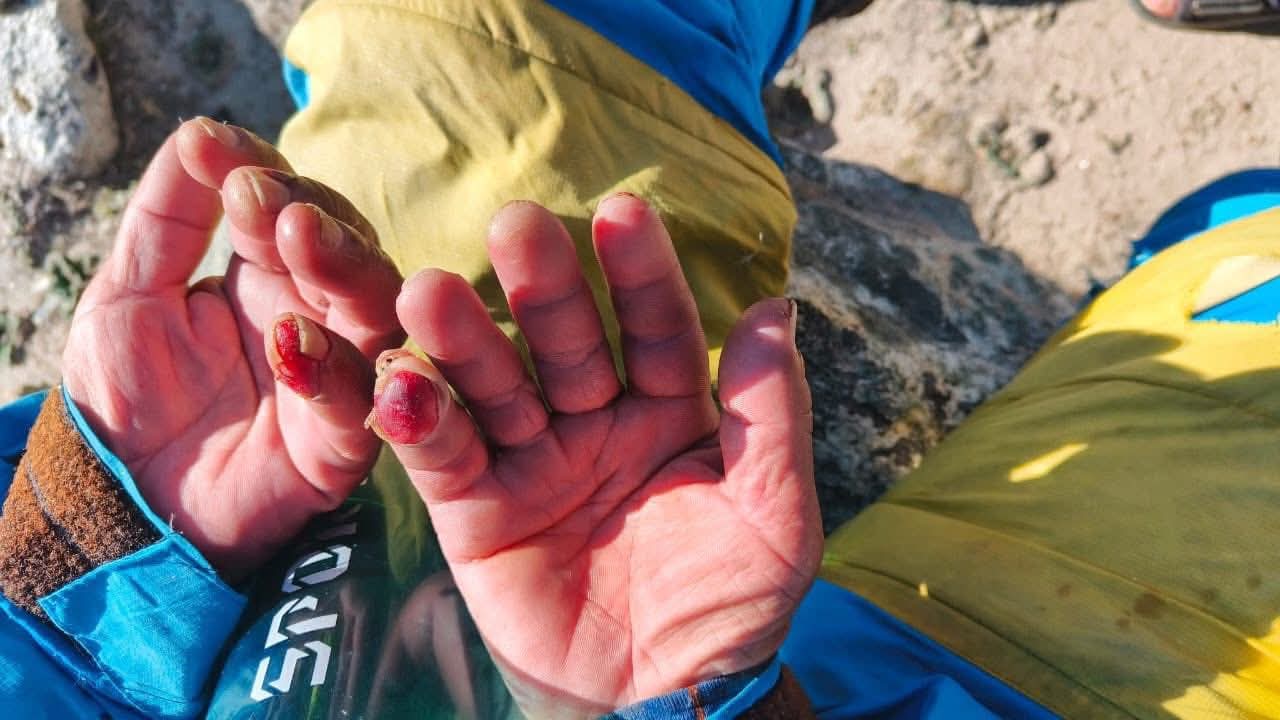
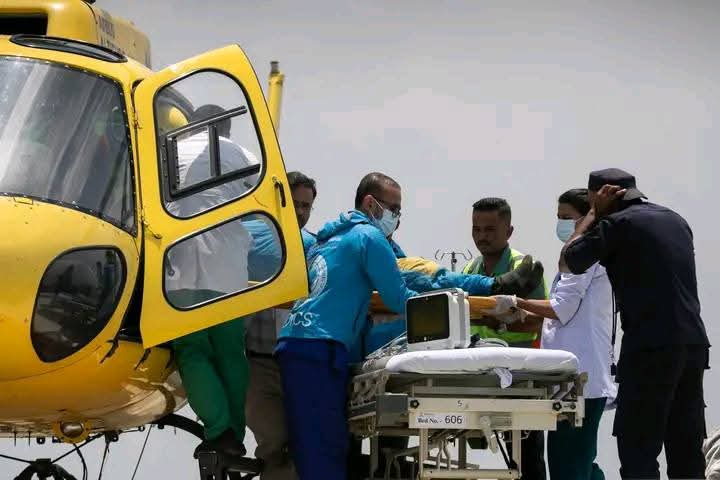
It was Dawa. Conscious, but in an extremely weakened state. His hands bore severe frostbite. He spoke slowly. The SPCC team helped him down to base camp and then to Gorakhshep, where a helicopter from Altitude Air Nepal was scrambled to fly him to HAMS Hospital in Kathmandu.
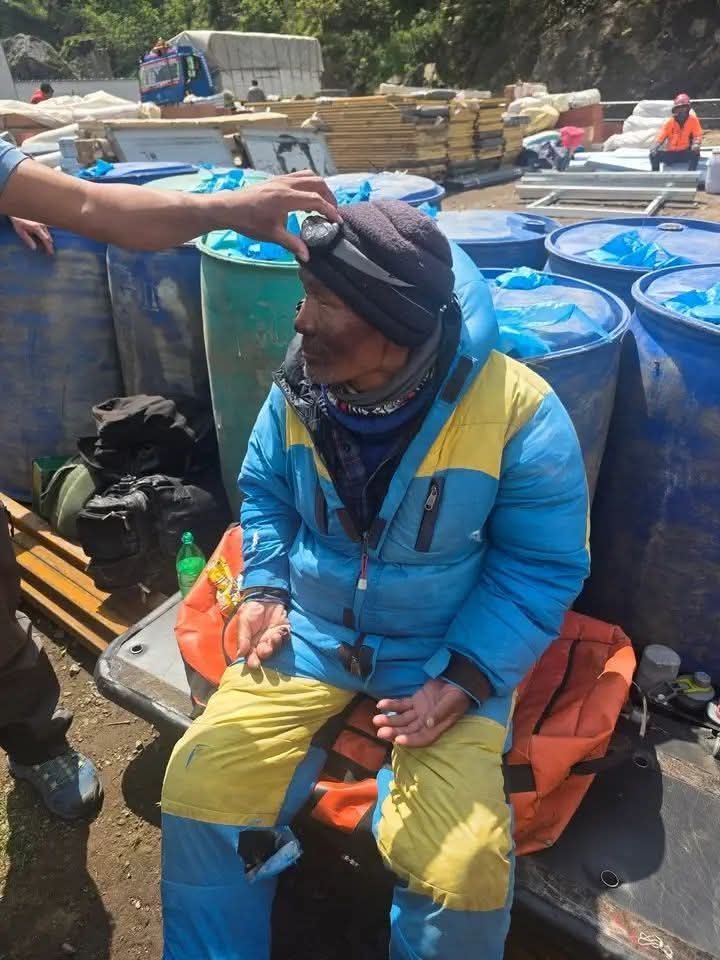
At the hospital, Dawa’s wife and daughter were waiting and had already begun the funeral rituals they believed were now necessary. The scene of their reunion was described by those present as deeply emotional.
“We first heard that he was still alive on the local news,” his daughter Mhendo Lhamo Sherpa told reporters gathered outside the hospital. “He recognized me. He speaks. We are happy.”
As of June 5, Dawa remains in intensive care at HAMS Hospital. Doctors are treating the frostbite to his hands. His condition is described as stable.
Dawa’s ordeal comes at the end of what was, by every statistical measure, the most successful Everest Spring season in history. Approximately 950 climbers, guides, and high-altitude workers reached the summit via the Nepal route in 2026: the highest number ever recorded in a single season.
But that success has a complicated shadow. The Polish client who descended from Everest ahead of Dawa has since spoken publicly, alleging serious safety failures: that Dawa was assigned summit duties he was not prepared for due to a staffing shortage; that oxygen management was chaotic; that climbers were not provided adequate food and water after brutal ascents; and that the guiding company prioritized commercial revenue over client and worker safety.
The Polish climber has publicly called for a full investigation. Dawa’s guiding company, Himalayan Traverse, has remained silent throughout. The question of accountability of who is responsible when a support worker is sent above the Death Zone and then left behind is one that Nepal’s mountaineering authorities may now be forced to answer.
Dawa and his Polish client abandon their summit push at ~8,450 m (27,720 ft) and return to Camp IV. Chris Thrall, another climber, reaches the summit that evening and meets the pair during his descent. The group spends the night at Camp IV together.
The Polish climber descends ahead of Dawa. With oxygen critically low and most expedition personnel already at base camp, Dawa falls behind. The SPCC simultaneously begins removing fixed ropes and ladders from the Khumbu Icefall. The climbing season is officially closed.
The Polish client reaches base camp. Dawa does not arrive. He is reported missing. His family is informed.
Dawa falls into a crevasse near Camp I at approximately 19,500 feet and is trapped for roughly two days before managing to free himself unaided.
8K Expeditions dispatches a rescue helicopter to search the area near where Dawa was last seen. He is not spotted. No further rescue operations are mounted.
SPCC waste-management workers Bhim Bhattarai and Durga Rai find Dawa crawling toward base camp near Crampon Point. He is conscious but in severe condition like frostbitten, exhausted, and barely moving. They help him to base camp, where a helicopter picks him up.
Dawa is flown by Altitude Air Nepal to HAMS Hospital in Kathmandu. His daughter says he recognized her and was speaking. His wife, who had already begun funeral rituals, was at his side.
Dawa remains hospitalized in intensive care, being treated for severe frostbite on his hands. His condition is described as stable. Calls for an investigation into expedition safety have begun.
Hillary Dawa Sherpa’s survival is an extraordinary testament to the endurance of the human body and spirit. But it is also a story about the invisible labour that makes Everest expeditions possible like the cooks, the camp hands, the support workers who are sometimes pushed well beyond their designated roles, and whose safety may not always be prioritized when the climbing calendar turns commercial.
He did not have a rescue team. He did not have ropes. He descended the most dangerous glacier on the highest mountain in the world alone, for days on nothing but the will to return home.
One more step. And then one more after that. That is how Hillary Dawa Sherpa came back from the dead.
 25+ years of trusted experience Local experts with personal care Safe, budget-friendly & customized treks Real stories, real people, real mountains
 DM us now for your dream Himalayan journey!