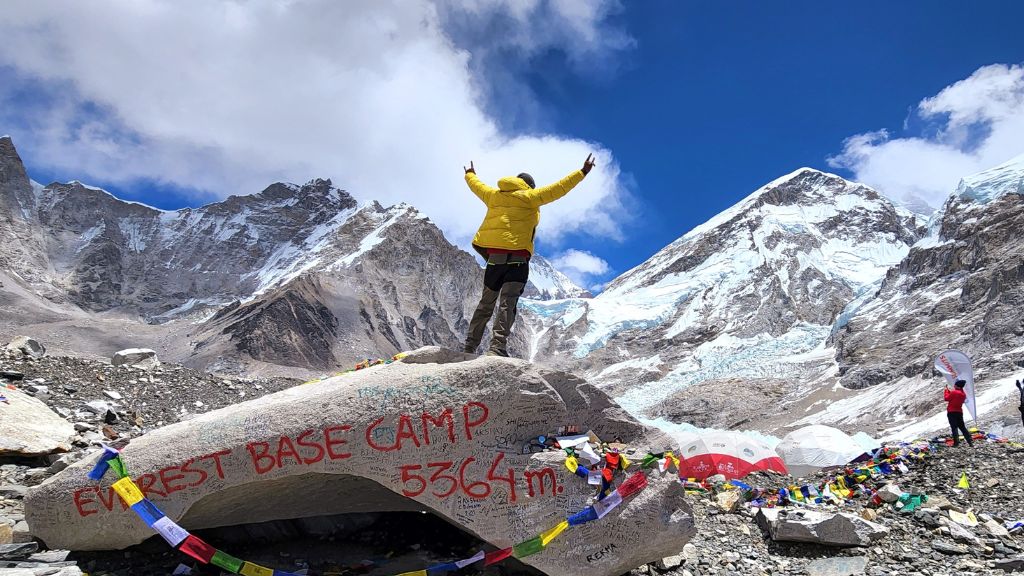
The Everest Base Camp trek in Nepal is a multi-day Himalayan trekking in Nepal that takes you to the base of Mount Everest at 5,364 meters. It starts from Kathmandu and follows the classic route through the Khumbu region, home of the Sherpa people.
Mount Everest, known locally as Sagarmatha in Nepal, stands at 8,848.86 meters, making it the highest mountain in the world. The Everest Base Camp trek allows ordinary travellers to walk close to this giant peak while enjoying mountain views, culture, and nature.
The trek usually takes 12 to 14 days, depending on your pace and acclimatisation days. It is considered a challenging trek mainly because of altitude, not technical difficulty. No climbing skills are needed for you to trek to the base camp.
Trekkers will pass through famous places such as Lukla, Namche Bazaar, Tengboche, Dingboche, Lobuche, and finally reach Everest Base Camp. A side hike to Kala Patthar (5,545 m) offers the best close-up view of Mount Everest.
This guide explains everything you need to know about doing the Everest Base Camp trek from Kathmandu, including the route, itinerary, cost, permits, best time, difficulty, packing list, food, accommodation, safety tips, and FAQs.
Everest Base Camp is located in the Khumbu region of northeastern Nepal, inside Sagarmatha National Park, a UNESCO World Heritage Site. Here is the location in simple terms:
Everest Base Camp lies near the border of Nepal and Tibet (China). The trek does not start near Kathmandu by road. Instead, trekkers need to take a short flight from Kathmandu to Lukla, which is the gateway to the Everest region. Sagarmatha National Park is famous for:
To reach Everest Base Camp, you must first travel from Kathmandu to Lukla, then trek on foot to the base camp.
The most common way is a 30 to 35 minutes flight from Kathmandu to Lukla Airport (Tenzing-Hillary Airport). This airport is known as one of the most exciting and challenging airports in the world.
Some important points to remember are:
During peak seasons (spring and autumn), flights may operate from Ramechhap (Manthali Airport) instead of Kathmandu. This requires a 4 to 5 hour drive from Kathmandu.
Some trekkers travel by road from Kathmandu to Salleri or Phaplu, then trek to Lukla. This adds several days and is usually chosen by those who want to avoid flights.
The classic Everest Base Camp trek route follows the Dudh Koshi River valley through Sherpa villages and high alpine landscapes. The main stops on the route:
The return route follows the same path back to Lukla.
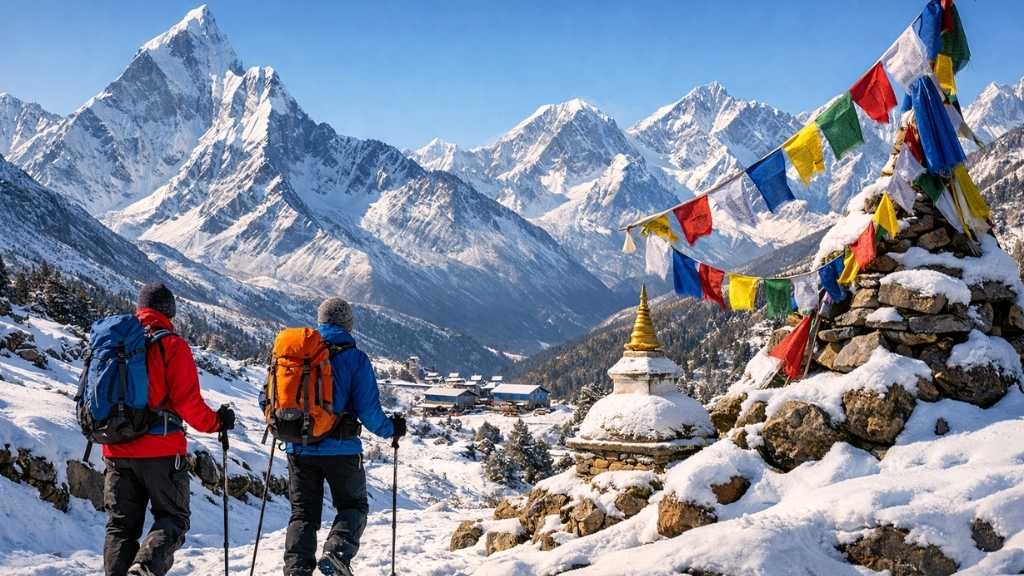
The most popular Everest Base Camp trek itinerary from Kathmandu is 14 days, including two acclimatisation days. This version is safer, more enjoyable, and highly recommended for first-time trekkers in Nepal. Below is a fresh, clearly rewritten day-by-day itinerary with simple explanations, realistic walking hours, and altitude details.
Day 1: Arrival in Kathmandu (1,400 m)
Your Everest Base Camp trek officially begins in Kathmandu, the capital city of Nepal. After landing at Tribhuvan International Airport, you will transfer to your hotel in Thamel, the main tourist area. Kathmandu is busy, colorful, and full of culture. On this day, most trekkers:
If time allows, you can explore nearby places such as Thamel streets, Kathmandu Durbar Square, or local markets. Staying hydrated and resting well is important before flying to the mountains.
Day 2: Fly from Kathmandu to Lukla and Trek to Phakding (2,610 m)
Flight time: 30 to 35 minutes
Trek time: 3 to 4 hours
Early in the morning, you take a scenic mountain flight from Kathmandu (or Ramechhap in peak season) to Lukla. The flight offers your first views of the Himalayas. After landing at Lukla (2,860 m), you meet the rest of the trekking team and begin walking. The trail descends gently through small Sherpa villages, mani walls, and prayer flags.
You follow the Dudh Koshi River to reach Phakding, a quiet village with many teahouses. This short day of trekking helps your body begin to acclimate to altitude.
Day 3: Trek from Phakding to Namche Bazaar (3,440 m)
Trek time: 6 to 7 hours
This is one of the most exciting days of the trek. The trail crosses several suspension bridges, including the famous Hillary Suspension Bridge. After entering Sagarmatha National Park at Monjo, the trail climbs steeply toward Namche Bazaar. On a clear day, you may see your first glimpse of Mount Everest from the trail.
Namche Bazaar is the main trading center of the Khumbu region. It has shops, bakeries, cafes, banks, and a hospital. You will stay here for acclimatization.
Day 4: Acclimatization Day in Namche Bazaar
Walking time: 3 to 4 hours (optional hikes)
Acclimatisation is essential for a safe Everest Base Camp trek. Instead of resting all day, you take short hikes and return to Namche. Popular acclimatization hikes include:
These hikes help your body adjust to altitude while enjoying views of Everest, Lhotse, Ama Dablam, and other peaks.
Day 5: Trek from Namche Bazaar to Tengboche (3,860 m)
Trek time: 5 to 6 hours
The trail from Namche to Tengboche is scenic and peaceful. You walk along a high trail with beautiful mountain views, then descend to cross the Dudh Koshi River before climbing again. Tengboche Monastery is the largest and most important monastery in the Everest region. Surrounded by mountains, it is a spiritual highlight of the trek. On clear days, you get stunning views of Ama Dablam, Everest, Nuptse, and Lhotse.
Day 6: Trek from Tengboche to Dingboche (4,410 m)
Trek time: 5 to 6 hours
From Tengboche, the trail descends through forests and crosses the Imja Khola River. The landscape slowly changes from green forests to open alpine terrain. You pass villages like Pangboche, one of the oldest Sherpa settlements in the region. After a gradual climb, you reach Dingboche, a popular acclimatization village. Stone walls around fields protect crops from cold winds and animals.
Day 7: Acclimatization Day in Dingboche
Walking time: 3 to 4 hours (side hike)
This second acclimatization day is crucial. Common hikes include:
From the viewpoints, you can see Makalu, Lhotse, Island Peak, and glaciers. After the hike, you return to Dingboche to rest.
Day 8: Trek from Dingboche to Lobuche (4,940 m)
Trek time: 5 to 6 hours
The trail climbs gradually through open landscapes. You pass Dughla, where the path becomes steeper toward the memorial area. At the Everest Memorial, you see stone monuments dedicated to climbers who lost their lives on Everest. It is a quiet and emotional place. After a gentle walk, you reach Lobuche, a small settlement surrounded by high peaks.
Day 9: Trek from Lobuche to Gorak Shep and Visit Everest Base Camp (5,364 m)
Trek time: 7 to 8 hours
This is the most important day of the trek. You walk along the Khumbu Glacier to reach Gorak Shep, the last village on the route. After lunch, you continue toward Everest Base Camp. The trail is rocky but not technical. Reaching base camp is a proud and emotional moment for many trekkers. You spend some time at Everest Base Camp before returning to Gorak Shep for the night.
Day 10: Hike to Kala Patthar and Trek to Pheriche (4,371 m)
Hike time: 2 to 3 hours
Trek time: 5 to 6 hours
Early in the morning, you hike to Kala Patthar (5,545 m) for sunrise. This is the best viewpoint to see Mount Everest up close. After descending, you trek down to Pheriche, enjoying easier walking and warmer air.
Day 11: Trek from Pheriche to Namche Bazaar
Trek time: 6 to 7 hours
You retrace your steps through Dingboche, Pangboche, and Tengboche. Descending feels easier, but long walking hours still require care. You stay overnight again in Namche Bazaar.
Day 12: Trek from Namche Bazaar to Lukla
Trek time: 6 to 7 hours
This is the final trekking day. You descend steeply at first, then follow the river valley back to Lukla. In the evening, trekkers often celebrate the successful completion of the Everest Base Camp trek.
Day 13: Fly from Lukla to Kathmandu
You take an early morning flight back to Kathmandu. Weather delays are possible, so it’s good to keep buffer days.
Day 14: Final Departure from Kathmandu
Your Everest Base Camp trek ends. You can depart Nepal or continue traveling.
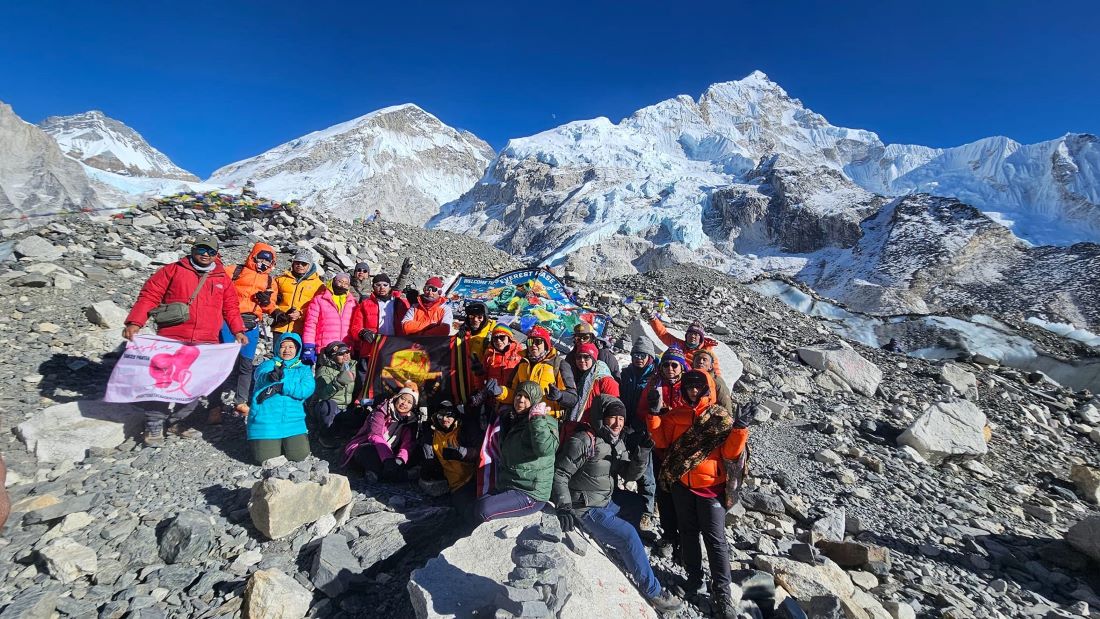
The Everest Base Camp trek is moderately difficult, mainly because of high altitude, not because of technical terrain. You do not need climbing skills, ropes, or prior mountaineering experience to complete this trek. Many first-time trekkers successfully reach Everest Base Camp every year by walking slowly, taking acclimatization days seriously, and following a proper itinerary.
The main challenges of the Everest Base Camp trek come from natural conditions in the Himalayas rather than the trail itself. The key difficulty factors include:
The trail is well-marked and does not require technical skills, but physical and mental preparation is important.
Altitude is the biggest challenge of the Everest Base Camp trek. As you go higher, the air becomes thinner, and your body receives less oxygen. Important altitude points:
Common altitude sickness symptoms include:
That is why acclimatization days in Namche Bazaar and Dingboche are essential for a safe trek.
On most days, trekkers walk 5 to 7 hours, depending on pace and altitude. Some days are shorter, while the longest day is the Everest Base Camp and Kala Patthar section. Trail conditions:
There are ups and downs every day, even when the altitude seems moderate.
You do not need to be an athlete, but you should be reasonably fit. You are ready for the Everest Base Camp trek if:
Recommended preparation includes:
Training for 6 to 8 weeks before the trek is ideal.
Yes, the Everest Base Camp trek is suitable for beginners who are physically fit, mentally prepared, and willing to walk slowly. Many trekkers with no prior trekking experience complete this trek successfully by:
Age is not a strict limit. People from their teens to their 60s complete the trek every year.
The mental side of the trek is just as important as physical fitness. Challenges include:
A positive mindset, patience, and flexibility help a lot during the trek.
Compared to other popular treks in Nepal:
This makes Everest Base Camp a good balance between challenge and achievement.
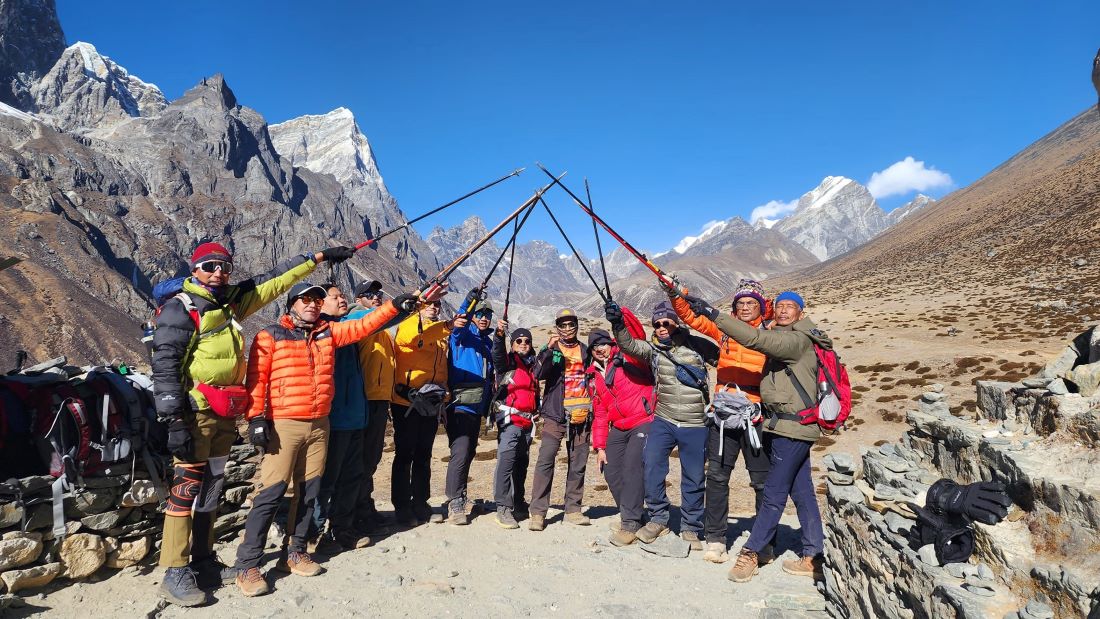
The best time to do the Everest Base Camp trek in Nepal is during spring (March to May) and autumn (September to November). These seasons offer stable weather, clear mountain views, and safer trekking conditions in the Khumbu region. Choosing the right season is very important because weather in the high Himalayas can change quickly and strongly affects flights to Lukla, trail conditions, visibility, and overall safety.
Spring is one of the most popular and reliable seasons for the Everest Base Camp trek. What to expect in spring:
Month-wise breakdown:
Spring is ideal for trekkers who want great views and don’t mind meeting other travellers on the trail.
Autumn is the second best season for trekking to Everest Base Camp in Nepal. It starts after the monsoon rains clean the air, making mountain views very sharp. What to expect in autumn:
Month-wise breakdown:
Autumn is perfect for photography and first-time trekkers who want predictable conditions.
The Everest Base Camp trek is possible in winter, but it is more challenging. Winter conditions include:
Pros of winter trekking:
Cons:
Winter trekking is suitable for experienced trekkers who are well-prepared for cold weather.
Monsoon is generally not recommended for the Everest Base Camp trek. Monsoon challenges:
However, the Everest region receives less rain than other parts of Nepal because it lies in a rain-shadow area. Some trekkers still go in early June or late August.
The best months for the Everest Base Camp trek are April and October. These months offer the best mix of weather stability, clear views, and safe trail conditions.
Approximate temperatures during trekking seasons:
Temperatures vary with altitude and weather conditions.
You should avoid trekking to Everest Base Camp if:
Proper planning and choosing the right season greatly increase your chance of a safe and enjoyable trek.
The cost of the Everest Base Camp trek from Kathmandu depends on the type of trekking experience you choose, the number of days, and whether you hire a guide or porter. Costs can range from budget-friendly to luxury.
Estimated cost: USD 800 to 1,200 per person
Budget trekking usually includes:
Tips for keeping costs low:
Estimated cost: USD 1,500 to 2,500 per person
Standard guided treks include:
This is the most popular option for first-time trekkers as it balances safety, comfort, and cost.
Estimated cost: USD 3,000 to 5,000+ per person
Luxury trekking packages include:
Luxury treks offer more comfort, especially for travellers concerned about altitude and fatigue.
Regardless of trek type, the following permits are mandatory:
Additional fees may include:
Flights to Lukla are required for most trekkers. Approximate costs:
Flight prices fluctuate depending on season and airline.
Daily costs vary depending on village and season:
Budget for at least USD 25–35 per day for food and drinks during the trek.
7.7 Hidden Costs to Consider
Planning for these costs ensures a smooth and stress-free trek.
Trekking to Everest Base Camp requires certain permits, adherence to rules, and sometimes a guide or porter. These regulations ensure safety, environmental protection, and local community support.
All foreign trekkers need the following permits:
1. Sagarmatha National Park Permit (SNP)
2. Khumbu Pasang Lhamu Rural Municipality Permit
3. TIMS Card (Trekkers’ Information Management System)
Permits must be carried at all times as park officials may check along the trail.
Guide:
Porter:
Hiring a guide or porter also benefits local Sherpa communities.
Carrying photocopies of all permits is recommended in case originals are lost.
Using a local agency is safer, especially for first-timers or those unfamiliar with Nepal’s trekking system.
On the Everest Base Camp trek, accommodation is primarily in teahouses, and meals are simple but nutritious. Staying in proper lodges and eating safely is essential for a comfortable trek.
1. Teahouses (Lodge-style):
2. Tea Shops / Guesthouses:
3. Luxury Lodges:
Booking in advance is recommended during peak seasons (spring and autumn).
Common meals on the trail:
Approximate meal costs:
Tip: Carry snacks and energy bars for long trekking days.
A proper packing list is essential for comfort, safety, and success on the Everest Base Camp trek in Nepal. The key is to pack light but include all necessary clothing, gear, and personal items.
Safety is crucial on the Everest Base Camp trek in Nepal because high altitude and remote terrain can pose health risks. Proper preparation, awareness, and caution ensure a safe and enjoyable trek.
Altitude sickness occurs when your body cannot adapt quickly to high elevations. Symptoms can appear above 2,500 meters and intensify above 3,500 meters. Common symptoms:
Serious symptoms (High Altitude Pulmonary or Cerebral Edema):
Prevention:
Important emergency resources:
Travel insurance that covers high-altitude trekking and helicopter evacuation is strongly recommended.
Here are the most frequently asked questions about the Everest Base Camp trek in Nepal, answered in simple language for trekkers of all levels.
Q1: How many days are needed for the Everest Base Camp trek in Nepal?
A1: The standard trek is 12–14 days, including acclimatization days.
Q2: How difficult is the EBC trek?
A2: The Everest Base Camp Trek is of moderate difficulty. The main challenge is high altitude, not technical climbing.
Q3: What is the best time to go?
A3: The Best Time to go to Everest Base Camp are Spring (March to May) and autumn (September to November).
Q4: Can beginners do this trek?
A4: Yes, beginners can do this trek if physically fit, acclimatize properly, and walk at a slow pace.
Q5: Do I need a guide?
A5: Yes, you do need a guide because they can help you un local support and safety.
Q6: How much does it cost?
A6: Trek to Everest Base Camp costs around USD 800 to 5,000 depending on budget, standard, or luxury packages.
Q7: Are permits included in packages?
A7: Yes, permits are included in the packages of you have already booked to your travel agency.
Q8: How much are daily expenses?
A8: Daily expenses are around USD 25–35 per day for food and drinks.
Q9: How much is the flight to Lukla?
A9: The flight from Kathmandu to Lukla is around USD 160–200 one way, depending on season.
Q10: Are tips required?
A10: Yes, Tips for guides and porters are recommended, about USD 10–15 per day.
Q11: What types of accommodation are available?
A11: Mostly teahouses, from shared rooms to private rooms; some luxury lodges available.
Q12: Are hot showers available?
A12: Yes, hot showers are available in some villages that costs around USD 2–3.
Q13: Is food safe?
A13: Yes, you must stick to cooked meals like dal bhat, noodles, or soups.
Q14: Can vegetarians manage?
A14: Yes, mostly vegetarian options are widely available.
Q15: How much should I budget for food?
A15: You must keep your budget around USD 5–10 per meal.
Q16: What clothing should I pack?
A16: Some of the layered clothing that you must pack before starting the trek are base layers, fleece or down jackets, waterproof outerwear, warm hat, gloves, wool socks.
Q17: Do I need trekking poles?
A17: Trekking poles are mostly recommended to reduce strain on knees, especially during descents.
Q18: Should I carry a sleeping bag?
A18: Yes, you must carry a sleeping bag rated for -15°C to -20°C for comfort in teahouses at higher altitudes.
Q19: Can I charge electronics?
A19: Yes, you can charge some electronic devices like mobile phone, power bank, or head lamps. Some teahouses provide solar-powered charging for a fee.
Q20: Do I need water purification?
A20: Yes, you need water purifying things like either tablets or filters to prevent sickness.
Q21: How can I prevent altitude sickness?
A21:To prevent altitude sickness, you need to ascend gradually, acclimatize in Namche and Dingboche, drink water, and avoid alcohol.
Q22: What if I get sick?
A22: If you get sick during the trek, guides can help; HRA clinics in Namche, Dingboche, and Pheriche; helicopter evacuation is available.
Q23: Can children do the trek?
A23: Yes, children can possibly do the trek, but only if healthy, acclimatize well, and walk slowly.
Q24: What vaccinations are required?
A24: Routine vaccinations are recommended; check with a travel doctor.
Q25: Is travel insurance necessary?
A25: Travel Insurance is necessary and strongly recommended, covering high-altitude trekking and helicopter evacuation.
Q26: How do I get to Lukla?
A26: You can go to Lukla by flight from Kathmandu (or Ramechhap airport in some seasons).
Q27: Can I trek independently?
A27: No, you cannot trek independently because hiring a guide is safer and helps with permits and navigation.
Q28: Are there ATMs on the trail?
A28: Yes, there are ATMs only in Namche Bazaar. That’s why you need to carry cash for other villages.
Q29: How reliable are flights to Lukla?
A29: Weather-dependent; delays are common, so allow buffer days.
Q30: Can I connect to the internet?
A30: Limited Wi-Fi available in some teahouses; speeds are slow.
Q31: Can I hike to Everest Base Camp in winter?
A31: Yes, but it is very cold, trails may have snow, and some lodges may be closed.
Q32: How many people go to EBC each year?
A32: Thousands; spring and autumn are busiest seasons.
Q33: Can I see Mount Everest clearly?
A33: Best views from Kala Patthar and early morning on clear days.
Q34: Are there mobile networks?
A34: Some villages have coverage; mostly Ncell and Nepal Telecom.
Q35: Can I extend the trek to Gokyo Lakes?
A35: Yes, this is a popular side trek for longer itineraries.
Q36: Is trekking physically tiring?
A36: Yes, moderate exertion daily; acclimatization days help.
Q37: Are local guides English-speaking?
A37: Yes, most guides speak English fluently.
Q38: Can solo travelers do this trek?
A38: Yes, with proper preparation, but safety is improved with a guide.
Q39: Are pets allowed?
A39: No, animals are not permitted in Sagarmatha National Park except for pack animals.
Q40: Is tipping mandatory?
A40: Not mandatory but appreciated for guides and porters.
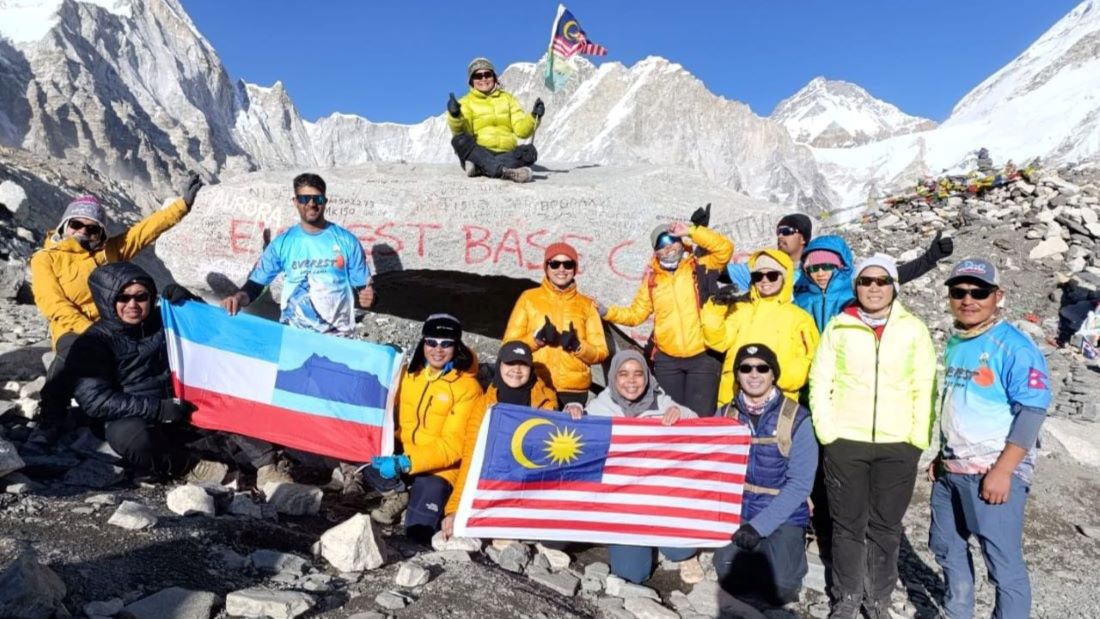
Everest Base Camp trek is one of the most iconic adventures in the world. It offers breathtaking mountain views, unique Sherpa culture, and a life-changing experience.
Take time to enjoy the journey; Everest Base Camp is about the experience, not just the destination.
Many people think Everest Base Camp is impossible, but thousands of trekkers of all ages and nationalities complete it every year. With proper planning, fitness, and respect for the mountains, you too can safely achieve this incredible adventure.
Remember, the trek is not a race. Take it slow, enjoy the views, and immerse yourself in the culture and natural beauty of the Himalayas.
 25+ years of trusted experience Local experts with personal care Safe, budget-friendly & customized treks Real stories, real people, real mountains
 DM us now for your dream Himalayan journey!