
To stand on the summit of Everest already feels like living a dream. But imagine going further: clipping into skis, trusting your body to carve turns on ice and snow at 8,848 meters, without a single puff of supplemental oxygen.
In September 2025, Polish ski mountaineer Andrzej Bargiel made that dream real. He became the first person to ski from Mt Everest and then ski all the way back to base camp, without the use of bottled oxygen. It is a feat that bends the rules of possibility.
This is his story: the preparation, the heartbeats, the moments of fear and triumph, what he said along the way, and what this means for mountaineering’s future.
Andrzej Leszek Bargiel was born on April 18, 1988, in Poland. He grew up in the mountains, learned skiing early, and over time merged his love for climbing and skiing into something rare: ski mountaineering at extreme altitudes.
He’s no stranger to pushing limits. He has skied from high peaks like Manaslu, Shishapangma, and Broad Peak over the years. Perhaps his most famous prior feat is that, in 2018, he became the first person to ski down K2.
He also runs a personal project called Hic Sunt Leones ( In Latin: “Here are Lions”), a name meant to evoke exploring unknown, dangerous territory. The mission: fast, oxygenless climbs and ski descents of the highest mountains.
By 2025, Everest was the crown jewel he had not yet fully conquered in his vision. He had tried before, in 2019 and 2022, but couldn’t complete due to adverse weather conditions or hazardous terrain.
So this descent was not sudden. It was years of planning, practice, failures, and return.
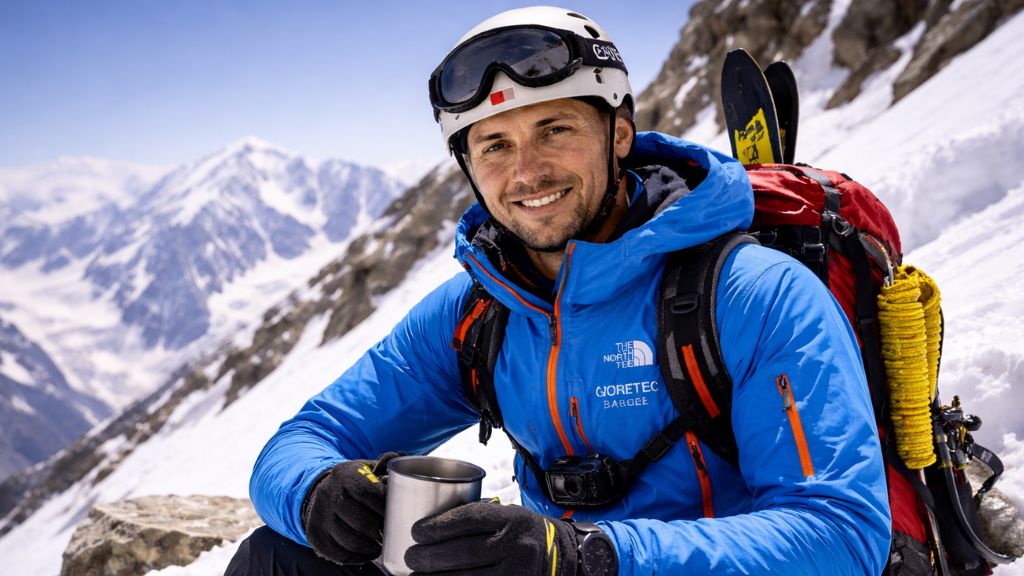
Climbing Everest is already a supreme challenge for most people. The air has only about one-third of the oxygen you breathe at sea level. Temperatures can plunge well below -30 °C, and conditions are unforgiving.
Above 8,000 meters lies the “death zone”: the body cannot acclimatise, organs begin to fail, lungs can fill with fluid, and the brain can swell. Even in the strongest shape, humans linger in this zone only for a limited time before danger overtakes them.
Most Everest climbers use supplemental oxygen tanks to ease breathing and reduce risk. Only a tiny fraction of climbers ever attempt the summit without extra oxygen.
Now, throw in skiing, which demands balance, focus, dynamic motion, tiny errors magnified, and you realise how audacious this goal was. To descend Everest entirely on skis without oxygen means surviving in the death zone longer, while fatigued, and making technical turns on steep terrain with minimal margin for error.
What Bargiel’s team called “gruelling” was not an exaggeration: due to fresh heavy snowfall and difficult trail-breaking, his climb from Camp 4 to the summit lasted nearly 16 hours in the death zone.
He later reflected:
The ascent was difficult. It’s incredibly high. You must be well-prepared to function for 16 hours above 8,000 meters.
At the summit, he wasted no time. He spent only a few minutes there before strapping on skis. His team said He spent only a few minutes on the summit before strapping on skis and beginning his historic descent, racing against the setting sun.
Starting the Ski Descent
From the summit, Bargiel skied down steep sections, including the Hillary Step, the South Summit, the Balcony, the Geneva Spur, and the South Col, all high-risk terrain.
By 5:20 P.M. local time, he dropped below Camp 4 and descended toward Camp 2.
Night fell, and navigating further in the darkness would have been too dangerous. So he paused at Camp 2 (about 6,400 m), resting overnight.
The next morning, at 7:00 A.M., he resumed his descent. The final leg required passing through the Khumbu Icefall, a chaotic, shifting glacier riddled with crevasses, seracs, and unstable ice. Remarkably, he passed it on skis, without fixed ropes.
A critical aid: A drone flown by his brother, Bartek Bargiel, helped guide a safer route through the icefall. By 8:45 A.M. local time, he reached Base Camp, finishing the full summit-to-base ski descent without oxygen.
One of the most interesting things is hearing from Bargiel himself.
From his team and Sherpa partners, you also find humility and respect:
These quotes and moments bring depth: this was not a mechanical stunt, but a human journey full of vulnerability, gratitude, and courage.
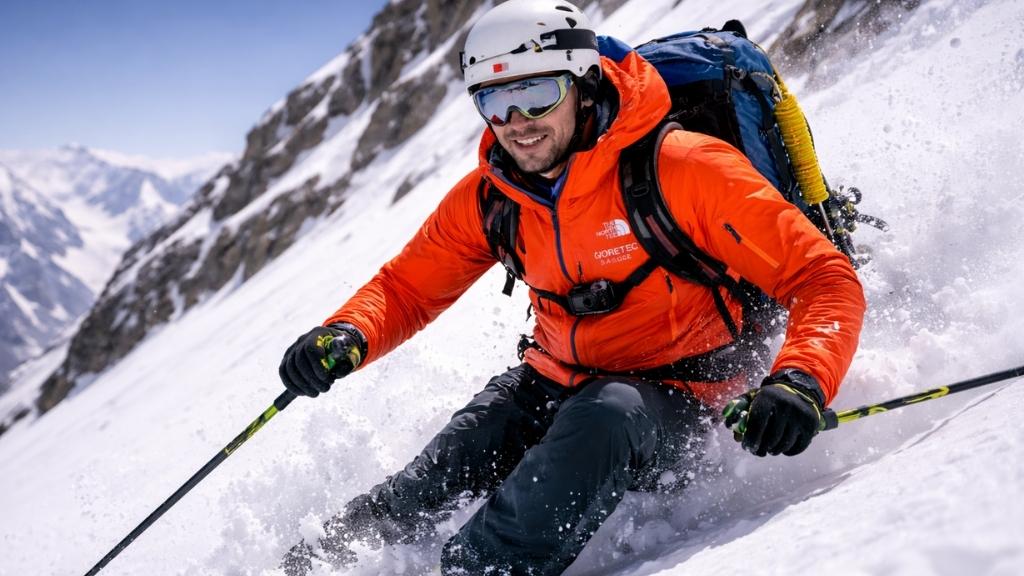
To appreciate the magnitude, one must understand the terrain and dangers.
Against all that, Bargiel threaded a narrow line between ambition and survival.
It’s tempting to say, “others skied Everest already.” But this is not the same.
That purity makes it more than a record; it’s a statement about what elite human adventure can still achieve.
Global & Local Response
What This Means for the Future
1. Did Bargiel use supplemental oxygen at any point?
No, neither during the climb nor the descent. This is a key part of what makes his achievement historic.
2. Why did he stop at Camp 2 and not ski straight through?
Because darkness made navigation unsafe, especially in the icefall. He opted to rest and continue in daylight for safety.
3. How dangerous is the Khumbu Icefall to ski through?
Very dangerous—ice shifts, hidden crevasses, collapsing seracs. Few would dare ski it without fixed ropes or lines. Bargiel’s successful passage is extraordinary.
4. Has Everest been skied before?
Yes, but all prior full descent skiers used supplemental oxygen (e.g., Karnicar in 2000) or mixed methods (skiing some sections and walking others).
5. What does this mean for high-altitude skiing?
It pushes the boundary. Others may try similar feats on Everest or other 8,000m peaks. But it remains in the domain of elite expeditionary athletes.
6. How many failed attempts did he make before success?
He attempted to climb Everest in 2019 and 2022 but had to abandon the attempt due to adverse weather and climate conditions.
7. How did he navigate the descent lines?
He used a drone flown by his brother to scout routes in the icefall, helping him pick safer paths.
8. What kind of equipment did he use?
Lightweight skis, protective high-altitude gear, skiing boots with crampons, ice axes, and minimal weight to balance speed and safety. (While specific brands weren’t all detailed, he’s known to use high-performance backcountry gear.)
9. Could others replicate this?
Only a handful in the world might match his skill, endurance, and psychological fortitude. Many might try, but few will succeed.
10. What does Bargiel himself think this means for his life?
He considers it a defining milestone. He said that skiing Everest without oxygen was a dream long held, one of the greatest challenges he could frame.
Andrzej Bargiel’s descent of Everest without oxygen skis is not just a world record; it is a testament to human possibility. It blends vision, preparation, courage, and humility in a way only true adventurers can. It reminds us that some of our greatest triumphs come from testing limits we once believed immutable.
His story will echo through mountaineering history, not just in the maps or statistics, but in how it inspires future explorers to imagine new lines, new peaks, new ways to descend.
 25+ years of trusted experience Local experts with personal care Safe, budget-friendly & customized treks Real stories, real people, real mountains
 DM us now for your dream Himalayan journey!